

When I first heard about esports scholarships, I thought of a future where kids get paid to play video games. But the truth is much more exciting.
These scholarships are serious. They help students pay for school while competing at the top level in digital games.
It all began in 2015 with Robert Morris University and the University of Pikeville. Now, over 150 colleges work with NACE, making gaming a real part of campus life.
The catch? Unlike traditional sports scholarships, these often require good grades. Schools want to show that gaming sharpens the mind, not dulls it.
It’s like proving every parent right about video games. Now, schools like Rochester Institute of Technology offer financial help to skilled gamers.
It’s not just about the money. It’s about combining passion with purpose, and maybe even getting a degree.
Top Schools & Programs
Forget dreaming about campus life while grinding ranked matches – today’s elite college esports programs are actively recruiting players. They look for those who can headshot opponents and tackle academic challenges with equal skill. The educational landscape has evolved quickly, with institutions now providing full-ride scholarships and specialized degree programs.
Harrisburg University is the top name in collegiate gaming support, giving full-ride scholarships that cover everything. UC Irvine in California offers $1,000-$6,000 awards for students majoring in esports management. It shows that running virtual battles requires the same strategic thinking as running a big company.
The diversity of programs shows how deeply gaming has entered academia:
- University of Texas at Dallas offers $1,000-$6,000 scholarships focused on League of Legends competitors
- Concordia University provides solid $2,000 scholarships for dedicated players
- Arcadia University maintains varying scholarship amounts across multiple game titles
Finding the right program is now easier thanks to the LOS Portal, which lists over 600 collegiate esports programs. It’s like a matchmaking service for talented gamers and schools looking to recruit them. Think of it as Tinder for academic athletic recruitment, but with better conversation starters.
This growth in college esports opportunities is more than just financial support. It’s a sign that competitive gaming has earned its place alongside traditional sports. For those aiming for a pro gamer career path, these programs offer the perfect place to grow. Here, academic achievement and competitive gaming go hand in hand.
Eligibility & Application Process
Think getting an esports scholarship is just about gaming skills? Think again. Your GPA is just as important as your gaming skills. Universities want to make sure you won’t ignore your studies for gaming.
The application process is tough. It’s like a Dark Souls boss fight with many phases:
- Academic performance – Keep that GPA high
- Game proficiency – Be great at specific games
- Digital presence – Show off your streaming and Twitch content
- Tournament results – Have good rankings and wins
- Character references – Get letters of recommendation
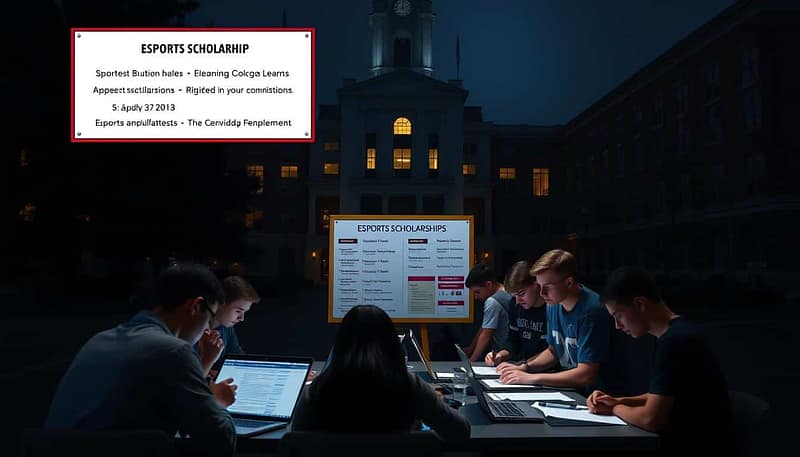
Your Twitch presence is more than just cool plays. They check if you’re nice in chat. No one wants a toxic teammate.
The key is leadership and community involvement. Did you help organize tournaments or coach young players? That impresses recruiters a lot.
Tryouts are not just about playing well. Coaches also look at your attitude and teamwork. Are you a good teammate?
Pro tip: Get letters from teachers who know you’re good at more than just games. Look into specific esports scholarships to see what they want.
Networking is important too. Talk to current scholarship players. They know what coaches really look for.
Remember, universities want players who represent them well. Show you’re skilled, smart, and can get along with others.
Balancing School & Gaming
The secret to college esports success? Treat your school schedule like a pro gaming team. Every role needs its own practice time.
Universities don’t recruit players who see studies as optional. They look for strategic thinkers who manage time like a real-time strategy game. The irony? The skills for winning games – quick decisions, pattern recognition, and awareness – also ace exams.

Think it’s impossible to keep up with school and gaming? Modern programs have support systems for this balance. Academic advisors know when to skip practice for finals or reschedule for championships.
Here’s how top performers balance both:
- Time blocking – Schedule gaming practice like athletic training
- Skill transfer – Use gaming’s quick analysis for academic problem-solving
- Priority management – Prioritize academic deadlines like tournament brackets
Many esports scholarships require a minimum GPA. This shows games and studies aren’t mutually exclusive. It’s about mental discipline in both areas.
The most successful professional esports athletes treat academics like practice. They consistently practice, review, and analyze. Your math book is another strategy guide; your research paper, another mission.
Collegiate programs offer more than just gaming facilities. They provide academic support for gamers’ schedules and thinking patterns. This leads to players excelling in both digital battles and lecture halls.
This isn’t about sacrifice – it’s about synergy. The focus for perfecting headshots also helps with complex equations. The patience for ranked matches is the same as for research projects. In college esports, academic and gaming success go hand in hand.
Success Stories
Forget the tired narrative of gaming as wasted time. These students turned controllers into college acceptances.
A high school team won their state championship through HSEL. Their prize money funded their college applications. It’s a great return on investment.
The ESA Foundation scholars are another example. They are women and minorities who found educational opportunities in gaming. They showed that representation leads to real career paths.
VEF gave out over $300,000 in scholarships through High School Esports League. These aren’t just participation trophies. They are gaming grants that help people move up in society, unlike traditional sports.
What makes it work? Programs that started as clubs became talent pipelines. Schools that invested early now see their alumni get full-rides and pro contracts.
Want proof? The real success stories show strategic thinking beats athleticism. You don’t need to be athletic to succeed. Just dedication and the right opportunities.
These gaming grants are not charity. They are investments in the next generation of esports professionals. And they’re paying off more than expected.
Next Steps
Ready to turn your gaming love into a real academic boost? Your journey just got more exciting.
First, check out gaming grants. Why buy your own gear when groups can help? Look into Epic Megagrants or indie funds—they’re for everyone.
Platforms like LOS Portal and Stay Plugged In are like LinkedIn for gamers. They list college programs and women in gaming groups. Connect to find mentors and chances.
Don’t just play games—build your story. Keep track of your stats, get letters of recommendation, and keep your grades up. Your gaming story is what colleges want to hear.
Join groups like USAEL to start esports at your school. The future of esports education is now. It’s time to begin.