
Do you remember when knowing game strategies was all about Pac-Man’s pellet patterns? The 1970s were more than just bright lights and sounds. They were the start of thinking strategically in games.
Back then, every gamer was part of a big experiment. They didn’t know they were helping scientists understand cooperation. Now, Twitch streamers make money from their quick reflexes.
Now, we have esports with super-advanced strategies. What’s different? We’ve moved from Atari’s simple games to complex ones like Valorant. We’ve gone from basic theories to using real-time data to win.
But here’s the surprising part: The biggest challenge isn’t in the game code. It’s in our brains. Why do pro gamers study Art of War? It’s because winning games is all about understanding people, not just code.
Historical Perspective: Early Days

Before the days of battle passes and esports, vintage gaming was all about survival. Imagine arcades lit up like day and night, where players saved quarters like they were gold. They played with a focus that made every move count, or else they’d lose.
Games like Space Invaders in 1976 were more than fun; they were tests of will. Players had to choose between risking it all for a high score or playing it safe. This taught them about risk and reward before they even learned to drive.
| Game | Strategy | 1980s Meta Twist |
|---|---|---|
| Space Invaders | Bunker conservation | Pixel-perfect shot timing |
| Pac-Man | Ghost pattern memorization | Quarter-to-survival ratio optimization |
| Tetris | Z-shaped panic management | Kinetic spatial forecasting |
Regulars at arcades were like hackers, figuring out game codes by playing over and over. Tetris experts were like data analysts, predicting block sequences. They built mental strategies while their thumbs got tough.
The real innovation wasn’t in the tech, but in the game plans that outsmarted everyone. Players perfected dodges in Galaga and debated if spending 25¢ on Dragon’s Lair was gambling. It was, and they were always at risk of losing.
Today’s MOBA strategies come from these early days. Next time you quit a game, think about those who played with real money.
Shifts Across Different Eras
If you think esports strategies evolve like Pokémon, you’re right. The final form isn’t Charizard; it’s a hyper-optimized meta that outdoes all others. The move from sweaty LAN basements to billion-dollar stadiums changed more than just the seats. It turned esports evolution into a battle where only the smartest strategies win.
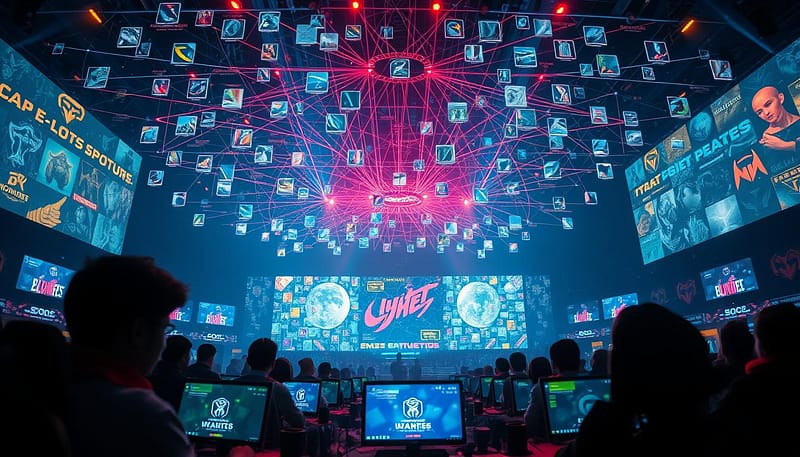
Starcraft’s APM (actions per minute) arms race was all about speed. Players in the 2000s treated their keyboards like pianos, aiming for mechanical perfection. Then, League of Legends came along, focusing on strategy over speed. It’s like chess with dragons, where controlling the map is key.
This shift isn’t random. It’s the “red queen hypothesis” of evolutionary game theory in action. Players must keep up with the pace to stay competitive. Welcome to modern esports match analysis, where today’s genius play becomes tomorrow’s tutorial.
Nowak’s 1992 spatial chaos models predicted this perfectly. When Dota 2 updated its map in 7.00, it changed the game’s ecosystem. Teams that adapted to the new map thrived, while those stuck in old ways failed fast.
| Era | Dominant Strategy | Key Metric | Evolutionary Driver |
|---|---|---|---|
| 2000s LAN | Mechanical Mastery | APM | Hardware Limitations |
| 2010s Online | Objective Control | Map Pressure | Streaming Culture |
| 2020s Stadium | Meta Prediction | Win Rate Variance | AI Analytics |
Why did Overwatch 2 kill 6v6? Blizzard was chasing a balance that made the game unpredictable. The 5v5 format brought fresh strategies, making the game fast-paced and unpredictable.
This constant change separates casual players from pros. While casual fans debate balance patches, top teams see meta shifts as chances to win. They don’t just adapt; they anticipate, turning chaos into victory.
Impact of New Technologies
Remember when beating a computer at chess felt like conquering Skynet? IBM’s Deep Blue didn’t just checkmate Kasparov in 1997 – it blueprinted the future of tech in gaming. Today’s AI doesn’t just calculate pawn movements; it psychoanalyzes your Valorant playstyle faster than a Twitch chat spams “EZ.”
The evolution from brute-force algorithms to AlphaStar’s Starcraft II neural networks reveals a dirty little secret: your gaming instincts are now quantifiable data points. Machine learning platforms like Mobalytics dissect aim patterns and rotation habits with surgical precision, creating what pros jokingly call “robot meta” – strategies so optimized they feel alien to human creativity.
Three ways AI reshapes competitive play:
- Predictive analytics: Anticipates opponent rotations using historical match data
- Personalized coaching: Flags inconsistent grenade throws in CS2 replays
- Meta forecasting: Projects weapon pick rates before patch notes drop
This transformative power of AI raises existential questions. When an algorithm can out-strategize decade-long veterans in StarCraft II’s chaotic battlefields, are we witnessing evolution – or obsolescence? The line between tool and competitor blurs faster than a Warzone TTK.
Yet here’s the twist: pro players aren’t being replaced. They’re evolving into cyborg strategists, blending human intuition with machine-generated insights. The real endgame? Mastering the art of when to trust the math – and when to yeet the playbook entirely.
Interviews with Veterans
Esports strategy is more than just playing games. It’s about the prep work that happens before the game even starts. Take EVO Moment #37, Daigo Umehara’s legendary Street Fighter III parry. Fans call it a miracle, but Daigo says it was just a normal day for them.
They spent weeks studying the game on diner napkins. This shows how deep the strategy goes.
Then there’s Faker’s 2015 Zed outplay against Ryu. It was so fast, it’s like a blink. But it wasn’t a lucky shot. Team SKT had run simulations on 87% of possible scenarios.
This shows how they turned human skills into a plan.
Talking to esports legends, we find three big changes:
- Prep tools: From simple charts to advanced models
- Intel gathering: From casual talks to secret servers
- Meta manipulation: Knowing patch changes months ahead
| Era | Tools | Preparation Time | Key Advantage |
|---|---|---|---|
| Pre-2010 | Notebooks, VHS tapes | 40-60 hours/week | Muscle memory mastery |
| 2010s | Spreadsheets, replay software | 70-90 hours/week | Pattern recognition |
| 2020s | AI simulations, biometrics | 100+ hours/week | Predictive analytics |
LCK commentator Chris “PapaSmithy” Smith says today’s pros use complex math. If you don’t, you’re out. But Faker says there’s always a human touch. “No data can predict when someone will take a big risk.”
The new strategy is beating the algorithms, not just the players. A coach shared a secret: they give fake leaks to confuse opponents. It’s like playing a game of chess with a League client open.
Future Trends in Strategy Development
Imagine strategizing at the speed of thought. Neuralink’s primate test subjects already play Pong with their brainwaves. This shows us a future where button mashing might be a thing of the past.
MIT’s 2023 VR experiments have players adapting strategies with full-body awareness. This turns corner camping into a form of tactical exercise. Tomorrow, gamers might need to be as agile with their minds as with their bodies.
Quantum computing is set to shake things up. What if true randomness changes how games work? Games could move beyond predictable patterns, making pros focus on probability instead of memorizing strategies.
VR adds another twist: dodging headshots becomes a real-life dodge-and-weave challenge. Soon, aspiring pro gamers might need to practice yoga alongside their aim training.
AGI coaches analyzing micro-expressions mid-match could be the next big thing. Imagine an AI analyzing your reactions faster than you can say “skill issue.” While we’re not at Skynet yet, Neuralink prototypes suggest interfaces where your intentions are executed instantly.
Adaptation will be key to success in the future. One question remains: Will we call it a “cheese strat” when an algorithm writes it? The future of gaming isn’t just about new tools; it’s about rebuilding the game itself. So, better get ready to stretch.