
Jumping into competitive gaming shouldn’t be hard. The world of most popular esports has many games, each with its own level of difficulty. It’s important to choose the right game to start with.
A good starter game should be easy to learn but also challenging. It should have a big player base, not too high skill requirements, and clear ways to join organized play.
Imagine the difference between a local sports league and the NBA. Both have competition, but getting into the NBA is much harder. We’ll look at what makes a game welcoming for new players, using data on player numbers and viewership.
The aim is to find games where new players can have fun, not just get beat down. Nobody likes losing while learning the game.
List of 10 Games
We’re cutting through the noise to show you games where skill really matters. These aren’t just time wasters. They’re places where skill is rewarded and new talent is noticed.
League of Legends: The Digital Chess Match
Imagine chess, but with 150 million opponents and toxic chat. League’s strategy is so deep, it could make Sun Tzu rethink his career.
Community: 150M+ players worldwide
Tournaments: Worlds championship with $2M+ prize pools
How to Get Started
Download the client, pick a champion, and get ready to lose your first 50 matches. Watch pro streams to learn positioning – it’s more important than your K/D ratio.
CS:GO/CS2: Tactical Precision Perfected
Every pixel counts, and your reaction time is key. This game is all about calculated warfare, not run-and-gun action.
Community: 20M+ monthly active terrorists… and counter-terrorists
Tournaments: Majors with $2M+ prize pools
How to Get Started
Learn spray patterns, memorize map callouts, and accept that you’ll die from angles you didn’t know existed. Community servers are your best training ground.
Dota 2: The PhD of MOBAs
If League is chess, Dota 2 is quantum physics with magical creatures. The learning curve is so steep, it should come with climbing gear.
Community: 7M monthly dedicated masochists
Tournaments: The International with legendary $40M+ prize pools
How to Get Started
Find a patient friend, pick one hero to master, and embrace the complexity. Watching tournament replays is mandatory – the strategy layers make Game of Thrones look simple.
Fortnite: Building Your Way to Victory
Where architecture students have an advantage. It’s not just shooting – it’s constructing entire fortresses while someone tries to blow them up.
Community: 400M+ registered builders
Tournaments: World Cup with $30M+ prizes
How to Get Started
Creative mode is your best friend. Master building before aiming – you can’t shoot what you can’t see behind their five-story fortress.
Valorant: CS:GO Meets Superpowers
Tactical shooting with magical abilities – because sometimes bullets aren’t enough. Each agent brings unique skills that change how you approach every round.
Community: 25M+ monthly agents
Tournaments: Champions events with $2M+ prizes
How to Get Started
Find your main agent, learn their ability timings, and practice crosshair placement. Deathmatch mode will teach you more about angles than geometry class ever did.
PUBG: The Battle Royale Purist’s Choice
Where looting simulator meets tactical survival. The tension of those final circles separates the hunters from the hunted.
Community: 75M+ copies sold
Tournaments: PGC with $2M+ prize pools
How to Get Started
Drop hot zones repeatedly to improve your early-game combat. Learn vehicle spawns and circle prediction – sometimes positioning beats pure shooting skill.
Call of Duty: The Console King
Fast-paced action where twitch reflexes meet map knowledge. It’s less about strategy and more about pure, unadulterated aggression.
Community: 100M+ trigger-happy soldiers
Tournaments: CDL with $1M+ events
How to Get Started
Find your optimal sensitivity settings, learn spawn rotations, and master movement techniques. Slide-canceling might feel silly until it saves your life.
Apex Legends: Movement Mastery
Where sliding, climbing, and ziplining become weapons. The movement system alone separates the predators from the prey.
Community: 100M+ legends
Tournaments: ALGS with $5M+ championships
How to Get Started
Master one legend’s abilities completely. Practice movement in firing range until sliding feels like second nature. Team coordination matters more than individual skill.
Rocket League: Soccer Meets Racing
Physics-defying car soccer that looks absurd until you try it. The skill ceiling is literally airborne.
Community: 100M+ rocket-powered drivers
Tournaments: RLCS with $6M+ seasons
How to Get Started
Free play mode is essential for ball control practice. Learn basic aerials before fancy tricks – consistency beats highlight plays in competitive matches.
Overwatch 2: Team Composition Science
Strategic hero switching meets objective-based combat. Counter-picking isn’t just encouraged – it’s required.
Community: 35M+ heroes
Tournaments: OWL with $1M+ competitions
How to Get Started
Master two heroes from different roles. Understand ultimate economy and team compositions – individual skill matters less than synergistic play.
These best competitive games offer more than just entertainment – they provide actual pathways to professional play. Choose based on your strengths, not just popularity. The right game matches both your skills and your tolerance for frustration.
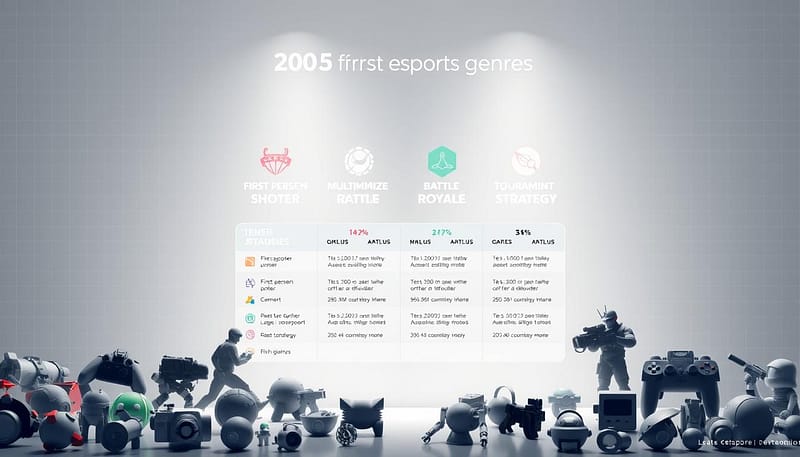
Description, Community Size, Tournament Support of Each
Let’s look beyond the marketing and see what these games really need from players. Think of this as nutritional labels for your esports diet. We’re showing you the real ingredients, not just the flashy packaging.
League of Legends is in the MOBA genre, a mix of strategy and teamwork. It has over 100 million players monthly. But, be ready for a lot of negativity, like Twitter arguments.
It supports tournaments from local events to the World Championship with big prizes.
Counter-Strike: Global Offensive is all about teamwork in the tactical FPS genre. It has about 20 million players monthly. The community is known for being mature.
Its tournament path is clear, from amateur to pro in competitive gaming.
Fortnite leads in battle royale games with its creative building. It has 80 million players monthly, mostly young. But, it’s surprisingly welcoming to new players.
Epic Games invests a lot in tournament prizes, making it easy to compete.
| Game | Genre | Monthly Players | Tournament Accessibility | Newcomer Friendliness |
|---|---|---|---|---|
| League of Legends | MOBA | 100M+ | Medium | Low |
| CS:GO | Tactical FPS | 20M | High | Medium |
| Fortnite | Battle Royale | 80M | Very High | High |
| Dota 2 | MOBA | 7M | Low | Very Low |
| Valorant | Tactical FPS | 15M | Medium | Medium |
Knowing these esports genres changes how you play. MOBAs need strategy and teamwork. FPS games require quick reflexes and spatial awareness. Battle royale games test your survival skills and adaptability.
The mindset for each genre is very different. It’s like learning architectural design versus mastering emergency surgery. Both need skill, but the mindset and preparation are worlds apart.
How to Get Started
So you’ve picked your favorite game from the most popular esports titles. Congratulations on making it past the tough decision phase. Now, it’s time to turn from a casual player to a serious competitor. We’ll cover the key steps to help you.
First, upgrade from that old PC. You don’t need a supercomputer, but your gear should be better than an old computer. Most most popular esports games work well on mid-range setups. For console players, make sure your subscription is active and your controller is in good shape.
Finding Your Tribe: Beginner-Friendly Communities
Don’t get discouraged by asking simple questions and getting harsh feedback. Stay away from toxic groups and find beginner-friendly communities. These places are like digital training centers where you can learn from others without being judged.
Practice Regimens That Actually Work
Just playing for hours won’t improve you much. Instead, focus on structured practice:
- Watch your game recordings to learn from mistakes
- Practice specific skills every day
- Play with players who are a bit better than you
Streaming Setup: Your Digital Stage Presence
Streaming is key to growing your audience. Setting up OBS takes just 20 minutes. With a good webcam, mic, and internet, you can turn your gaming into a show. Remember, people watch for the personality, not just the game.
Esports Etiquette: The Unwritten Rules
While trash talking can be fun, being rude is not. Learn to be respectful. Use mute buttons when needed. Saying “gg” after a game is a must—it shows good sportsmanship.
Brand Building From Day One
Your username is your brand. Use the same name on all social media, create interesting content, and network with other players. In esports, it’s not just about being good; it’s about being a complete package.
This journey is about building lasting skills and habits. Stop reading and start practicing. Your first tournament is waiting for you.
Transitioning Between Titles
Game-hopping is like career diversification. Your skills from CS:GO are perfect for Valorant. Your strategy from League works well in Dota 2’s chaos.
The best competitive games share common traits. Your mechanical skills might need adjusting, but your game sense is key. Pros like TenZ didn’t start from scratch – they built on their experience.
Your contract might change, but your fans stay loyal. Smart moves keep your brand strong while exploring new areas. It’s like moving to a new department without leaving the company.
Being good at many games makes you recession-proof. When the game changes or scenes fade, you adapt. This ultimate player’s guide explains how pros make these shifts.
Timing is everything. Switch games during the off-season. Practice new titles before making it public. Your career is not just one game – it’s your ability to adapt to new challenges.