Highlight reels and Twitch clips are not what it’s about. It’s a tough world where your rank and win rate matter. You’re not just competing with the best in your area. You’re aiming for the top 0.1% of the top 1%.
This is not about being the best in your Discord server. It’s about being among the elite. One mistake can ruin everything.
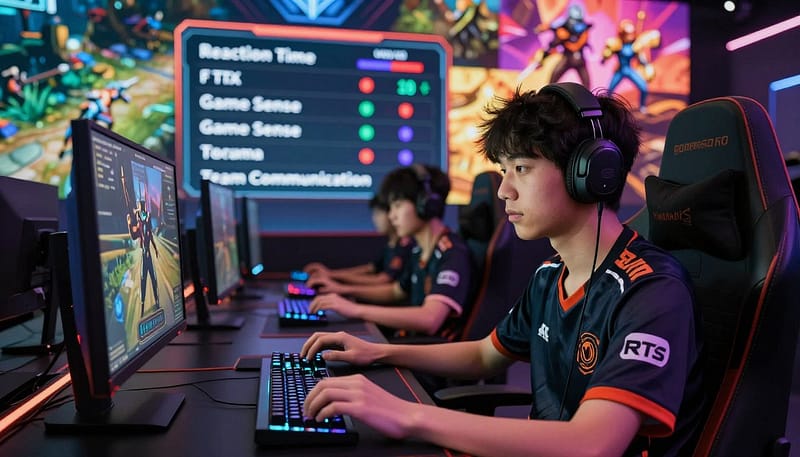
The goal is not just talent. It’s about putting in 8 to 12 hours of deliberate practice every day. It’s not casual gaming. It’s a full-time job with no breaks.
So, do you have the discipline? The mental strength of a Navy SEAL and the strategy of a grandmaster? The journey is tough, like pushing a boulder up a steep hill. Before starting, you need a solid plan. For more on the mindset and training needed, check out our definitive guide.
This is where the journey begins. Not where it ends.
Amateur Leagues and Qualifiers
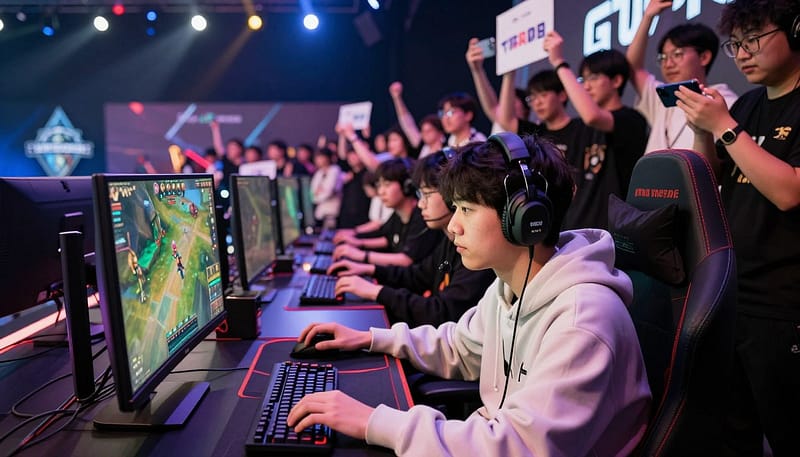
Forget the tutorial level; the amateur circuit is the first real boss fight in the game of how to go pro in esports. It’s not just casual play. It’s like a chaotic, open tryout where your gamertag is your resume. Every match is a job interview.
Your goal is to build a digital resume that proves you can handle the pressure, strategy, and grind. Think of it as building a case file for the scouts you hope are watching.
Finding Your First Tournament
Finding your first tournament can feel like deciphering a map without a legend. Your mission is to get your name on a tournament results page—any page. Start by thinking local and digital.
- Search Smarter: Don’t just search “esports near me.” Get specific. Google “City Name – [Your Game Title] – Esports Tournaments” or “local LAN events.” The best way to start is often to find local tournaments at gaming cafes or community centers.
- Go Digital: Your most powerful tool is the internet. The best communities for finding your in are online. Join Discord servers, subreddits, and game-specific forums. This is where real opportunities, from online qualifiers to pickup scrims, are posted. It’s where the road to becoming a professional esports athlete often gets its first, tentative mapping.
- Start Small, Think Big: Don’t wait for a major open qualifier. Look for small, online cups or weekly tournaments. The goal isn’t a massive prize pool; it’s that first line on your digital resume: “Placed Top 8 in the ‘Saturday Night Scrim’ Cup.”
This is the proving ground, the first real step on the path to pro-gaming. It’s less about a single victory and more about building a track record.
Online and Local Ladder Climbing
Ranked ladders and tournament results are two different skill sets. The ladder is your daily grind, the 9-to-5 of how to go pro in esports. It’s where you hone mechanics and consistency against a global pool of players. But a high rank is just a number. The real test is tournament performance.
Local LANs and online qualifiers are where theory meets pressure. This is where you learn that your “team” might be a ragtag group of friends, and your “sponsor” is the pizza you all chipped in for. The chaos is the point. It teaches you to adapt, to communicate under pressure, and to perform when your name is on the bracket. This messy, glorious grind is the true road to becoming a professional. It’s about proving you can win, and more importantly, that you can be found.
So, start climbing. Not just the in-game ladder, but the real one. Sign up. Show up. Get your name on the board. That’s how the journey to pro begins.
Team Trials and Scouting
You’ve made it big in amateur games. Your name is talked about online. Now, it’s time for the real challenge: professional tryouts. This is where talent meets the test of professionalism.
Getting Noticed by Organizations
Being noticed isn’t just about flashy plays. It’s about being a team player. Scouts look for more than just skill. They want players who fit into the team’s puzzle.
To get a tryout, it’s not just one clip. It’s about being consistent. Your win rate, understanding of the game, and teamwork skills matter. Scouts value attitude and teamwork skills over raw talent.
Networking is key. It’s not just who you know, but who knows you. Joining a team is better than going solo. Events and social media are great for networking.
The Grind of Tier 3 and Semi-Pro Teams
This is the minor leagues of esports. It’s tough and not glamorous. Teams here often have little money and face long hours.
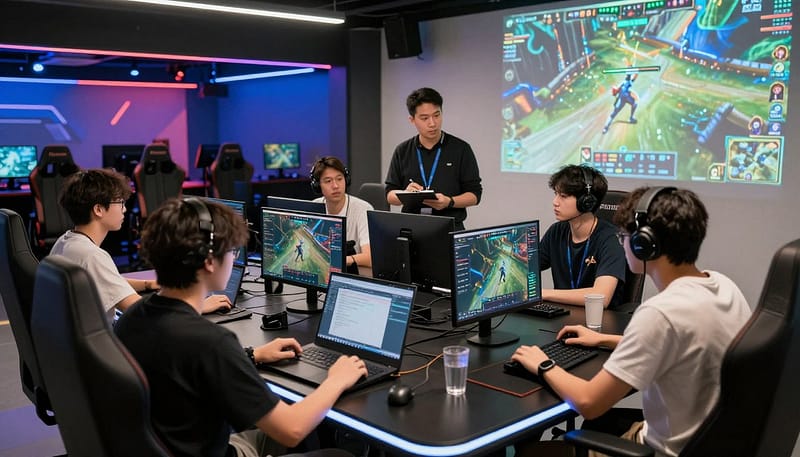
The grind is intense. It’s about long practice days and online qualifiers. It’s about balancing practice and life. This is where careers are made or broken.
Scouts watch Tier 3 teams closely. They look for talent that can handle the pressure. This is where the next stars are found.
To understand scouting, know what each level looks for. The path to the top is a ladder with different priorities.
| Team Tier | Key Characteristics | Scouting & Trial Focus |
|---|---|---|
| Tier 1 (The Elite) | Established orgs, salaried players, major sponsorships. The goal is to win international titles. | Proven tournament results, mental fortitude, ability to perform on LAN, deep champion/agent pool. |
| Tier 2 (The Contenders) | Established, salaried teams in secondary leagues. Consistent qualifier contenders. | High, consistent performance in Tier 2/Academy leagues, ability to execute complex strats, coachability. |
| Tier 3 / Semi-Pro | Amateur or semi-pro teams, often self-funded. The “grind” tier. | Mechanical skill, raw talent, work ethic, and a coachable attitude. Scouts look for diamonds in the rough who can be molded. |
The table shows a roadmap, not just a hierarchy. Your journey starts at the bottom. The Tier 3 and semi-pro scene tests your endurance and teamwork. It’s about the hard work, not just playing games.
Branding and Visibility
In today’s gaming world, your kill/death ratio might get you on the leaderboard. But your personal brand gets you paid. Modern pro gamers are not just athletes; they’re also media companies.
You’re not just selling your skills. You’re selling a personality, a story, and a lifestyle. Sponsors and fans want to buy into it. This isn’t vanity; it’s career capital.
Building a Personal Brand as a Player
Forget the myth of the silent, mysterious pro. In today’s world, silence is a liability. Your personal brand is your IP that lasts beyond any single win.
It’s the story you tell, the persona you project, and the value you offer. Think of it as an investment. Your follower count, engagement rate, and merchandise sales are what GMs look at. Your personal brand is why a sponsor picks you over others.
Your Twitch or YouTube channel is your 24/7 audition. Content creators earn income through ads, donations, and sponsorships. Live streaming and YouTube videos are key to building your platform.
Every stream, tweet, and highlight clip builds or chips away at your brand. This isn’t about posting random clips. It’s a strategy. A witty tweet about a patch update can get more engagement than a win.
A behind-the-scenes vlog humanizes you. A consistent streaming schedule builds a community. Your social media is your press wire, your direct line to fans and sponsors. Think of your professional brand building as a long-term investment. Every piece of content is a deposit in your brand equity.
Consider the shift in mindset required:
| The Player Mindset | The Branded Pro Mindset | |
|---|---|---|
| Focus | Winning the next match | Building a sustainable career |
| Audience | Teammates and opponents | Fans, sponsors, organizations |
| Primary Skill | In-game mechanics | Content creation & community building |
| Goal | Improve K/D ratio | Grow and engage a dedicated following |
The branded pro knows a viral clip on TikTok can be as valuable as a win. They understand their personality is the product. The game is just the medium.
In this era, turning a clutch play into a shareable clip is as valuable as the play itself. You’re not just building a highlight reel; you’re building a brand.
Realistic Timelines and Expectations
Forget the highlight reels and the seven-figure tournament wins. The path to a stable pro gaming career is long and hard. It’s not a sprint to fame, but a marathon through challenges.
The dream is often sold as a quick path to stardom. But the reality is a long journey of hard work. It includes 12-hour practice days, constant changes in the game, and the risk of losing skills quickly.
The Long Road to a Stable Career
Data shows the harsh reality of pro gaming. The average salary in Canada is $65,000, but this is misleading. It’s skewed by the top 0.1% earners.
For every star player, there are many more struggling. They play for little money and a dream. The journey takes years, not months. It’s a 5, 7, or 10-year plan, not a short-term job.
Financial and Personal Considerations
Let’s talk about money and mental health. The financial situation is tough. Low-ranking pros might earn $8,000 to $40,000 a year. The top players make over $100,000.
This path demands dedication, like a PhD program. But it lacks job security. Your social life and body suffer from long gaming sessions. The mental strain is real, with your career changing with each game update.
The “play games for a living” dream is not realistic. It’s a high-stress job that can end early. This career is filled with broken dreams, not just broken controllers.
Before diving in, think about the costs. Consider the years, not just the money. This path is for the strategic, obsessed, and resilient. It’s a high-stakes career where knowing the real cost of a dream is key.