

A convincing virtual football game can make the outcome of Sunday’s NFL matchup feel almost inevitable. Madden NFL 27 simulations now place greater emphasis on roster strength, but a realistic final score still isn’t proof that the game can predict what happens on an actual NFL field.
That distinction matters because Madden has different ways of measuring football performance. Its competitive gameplay and tournament meta concern player-controlled execution, while Franchise simulation depends on computer-generated decisions. Neither experience should automatically be confused with a real NFL forecast.
Fans examining real-world matchups can find the best football odds by comparing moneylines, point spreads, and totals across sportsbooks. Those figures represent market prices, not outcomes generated by a video game. Understanding the difference becomes particularly useful as Madden’s simulation systems continue to change during the 2026 NFL season.
Madden NFL 27 Simulations Put Greater Weight on Team Quality
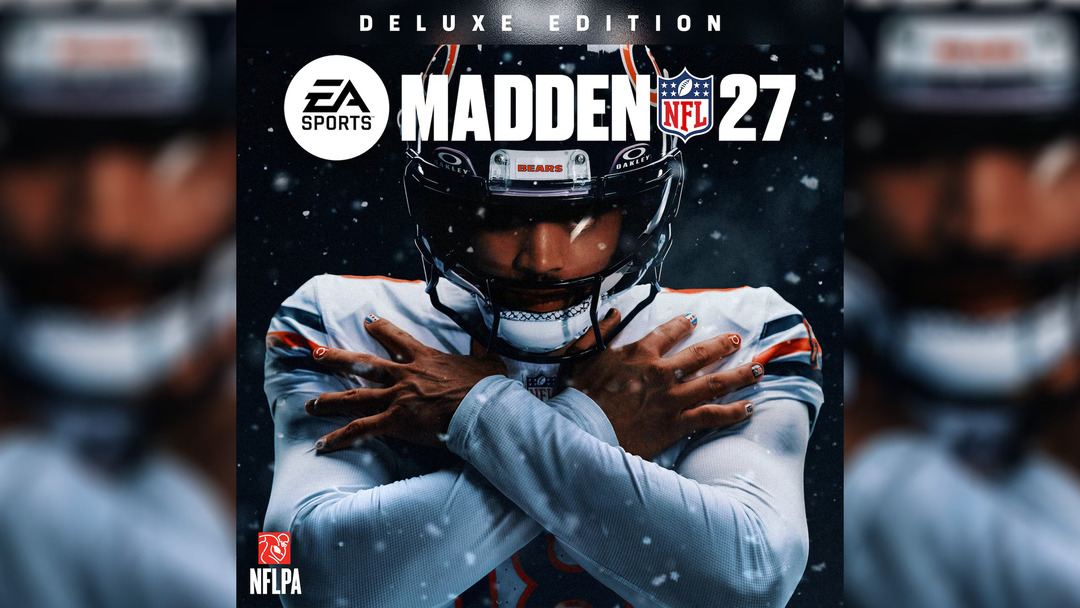
Released on August 13, 2026, Madden NFL 27 introduced substantial changes to Franchise mode, including a new Persona Engine, evolving player relationships, and adjustments to computer-controlled team behavior.
One of the most consequential changes received less attention than the new player personalities: the rebalancing of SuperSim.
EA’s Franchise development breakdown explains that certain playbooks previously influenced simulated results too heavily. This could create unrealistic situations in which a team’s scheme overshadowed its actual personnel.
The revised system gives player ratings and roster quality more influence. Computer-controlled teams can also adjust their offensive approach when their personnel changes.
That is a meaningful improvement for Franchise players trying to build competitive teams.
However, greater simulation realism does not establish greater accuracy in forecasting real NFL games. A system designed to produce believable results inside Madden still operates under the game’s own ratings, rules, and calculations.
Why a Simulated Victory Is Not a Reliable NFL Prediction
Imagine running a virtual matchup between two NFL teams and watching the underdog win comfortably.
The offensive line protects its quarterback, the running game controls possession, and the defense forces three turnovers. Everything looks plausible.
But the result only establishes what happened under that particular simulation.
It does not reveal how frequently those events would occur in the real matchup.
Even repeated simulations require careful interpretation. If one team wins seven of ten virtual games, its 70% simulation win rate describes those ten trials. It does not establish a 70% probability of winning the real contest.
Simulation frequency is not validated probability.
The distinction becomes more significant when an engine uses ratings, coaching systems, or player tendencies that differ from actual conditions.
A video game may represent an elite quarterback’s passing ability accurately enough to create enjoyable gameplay without reproducing every tactical decision, physical limitation, or unexpected event that determines a real NFL outcome.
What Madden Simulations and Football Odds Actually Measure
Simulated results and sportsbook markets can describe the same matchup while answering fundamentally different questions.
Madden generates outcomes within a programmed football environment. Sportsbooks set and adjust prices for real-world events, incorporating available information, market activity, and their own pricing considerations.
The comparison exposes several limitations.
| Comparison | Madden NFL 27 Simulation | Real NFL Betting Odds |
|---|---|---|
| Primary purpose | Generate virtual football outcomes | Price real-world wagering markets |
| Main inputs | Player ratings, rosters, game logic, and settings | Team information, pricing models, and market activity |
| Typical output | Simulated scores and season results | Moneylines, spreads, and totals |
| Changing conditions | Game updates, roster files, and simulation settings | Injuries, team news, and market movement |
| Main limitation | Accuracy as a real-world forecast is unproven | Prices contain bookmaker margins and can change |
Neither system eliminates uncertainty.
A point spread is not a guaranteed winning margin, just as a Madden final score is not a verified prediction. Betting prices also include margins that prevent their implied probabilities from being treated as perfectly neutral estimates.
The practical lesson is to separate entertainment from evidence before drawing conclusions from either type of number.
Roster Updates Can Change the Story Before Kickoff
A simulation is only as current as the information and game settings used to produce it.
For example, a Franchise save created before a significant NFL trade may continue with a roster that no longer resembles the real team. A newly downloaded roster does not automatically make an existing fictional season identical to current NFL conditions.
There is another complication: the game itself keeps changing.
EA’s October 20, 2026 patch notes, covering the October 21 title update, detailed improvements to CPU roster management, player contracts, and simulation-related progression.
Developers addressed excessive player development during multi-season simulations, premature retirements, and several salary-cap problems.
Some salary-cap improvements require a newly created Franchise league to take full effect. That means two players using different saves or game versions may not be testing identical systems.
These fixes primarily concern how Madden’s simulated league functions over time. They should not be mistaken for proof that the game has become better at predicting individual NFL results.
Version consistency matters when comparing simulation outcomes across several weeks.
How to Test Madden NFL 27 Simulations More Carefully
Players interested in testing Madden’s predictive value can approach the exercise as a controlled experiment rather than selecting whichever virtual result looks most convincing.
Start with a clearly defined matchup and document the roster version, game settings, injuries represented, and simulation method.
Then run multiple simulations under consistent conditions. Record every result, including unexpected blowouts and repetitive outcomes, rather than keeping only the most entertaining games.
The goal is to understand the engine’s behavior.
A small collection of results can reveal interesting patterns, but it cannot establish reliable forecasting accuracy. For that, outcomes would need to be recorded before actual games and evaluated across a sufficiently large sample.
It also helps to compare Madden’s results with a simple benchmark, such as the pregame market favorite. Without that comparison, a simulation system could appear successful merely because it frequently selects stronger teams.
An especially useful distinction involves player-controlled versus CPU-controlled outcomes.
Human players can exploit familiar play designs, make unconventional decisions, or repeatedly target weaknesses in the game’s artificial intelligence. Those habits may say more about the person holding the controller than about either NFL roster.
Keeping experimental conditions consistent makes the results more meaningful, even when the exercise remains recreational.
The Next Madden Updates Will Test Simulation Consistency
Madden NFL 27’s October adjustments demonstrate that Franchise simulation remains an active area of development.
Future changes to player progression, roster management, defensive behavior, and game logic could influence the results players generate. That makes comparisons between old and updated simulations especially sensitive to changes in game versions.
For gaming enthusiasts, this creates a worthwhile opportunity to examine how a sports simulation responds to different personnel and strategic decisions.
For football fans, the boundary remains clear.
Madden NFL 27 simulations can illustrate potential matchups, experiment with tactical choices, and produce entertaining alternative seasons. They are not independently validated NFL forecasting tools.
The strongest reason to use them is to understand how Madden interprets football, rather than treating a virtual scoreboard as a promise about the next real game.