

Let’s be honest – nobody enjoys the emotional bloodsport of selection processes. Not the players sweating through their controllers, not the parents nervously watching from digital sidelines, and not the coaches who have to play executioner.
So why do competitive gaming organizations put us through this modern-day gladiatorial selection? Because at the end of the day, this isn’t a participation trophy economy.
Organizations need to identify who can actually deliver results under pressure. It’s the difference between carrying your squad to victory and being the reason they’re watching finals from spectator chat.
It’s about finding those rare competitors who transform pressure into performance, not those who crumble when stakes get real. The cutting process might feel severe, but as top competitive squads demonstrate, winning requires identifying players who elevate everyone around them.
This isn’t just about individual skill – it’s about building cohesive units that function like well-oiled machines under championship pressure.
What Teams Look For
Ever wonder what teams look for when you try to join pro team rosters? It’s not just about being good at games. Being able to hit targets like a pro is important.
Teams look for a special mix. They want players who are precise, have great game sense, and stay calm under pressure. It’s like a test of personality and skill.
Can you talk without getting angry online? Can you change your game plan quickly? Do you take responsibility for mistakes instead of blaming others?
Teams check your gameplay in different ways:
- Mechanical mastery – how well you aim and move
- Strategic implementation – knowing how to control the game
- Adaptability quotient – adjusting to new strategies
- Communication quality – clear and helpful team talk
They’re not just looking for good players. They want teammates who won’t stress them out during big games. It’s like a job interview, but with more gaming.
Every mistake is studied, every decision is checked, and every emotion is noted. Trying to join pro team means showing you’re more than just a player. You’re someone they’ll work with every day, through good and bad times.
The top players know it’s not all about skill. It’s also about knowing the game and keeping your cool. They’re the ones you want to play with, even when things get tough.
How to Prepare
Ready for esports tryouts? Your late-night gaming and energy drinks might feel intense. But, it’s not enough. You need discipline and strategy, like an Olympic athlete and a chess grandmaster.
Start with a solid foundation. Pick a game where you excel. Invest in top-notch equipment that feels like part of you.

Physical fitness is key. Fast reflexes come from exercise, good food, and sleep. Don’t rely on just energy drinks.
Mental preparation is your edge. It’s not just about knowing the game. It’s about emotional strength and self-awareness.
Here’s your checklist:
- Develop a consistent practice schedule (quality over quantity)
- Analyze your gameplay with forensic precision
- Engage with community forums and professional networks
- Maintain physical health through exercise and nutrition
- Prioritize mental wellness and stress management
Remember, successful pro gaming recruitment isn’t just about being good. It’s about showing you’re dedicated and disciplined. Your hard work should show teams you’re serious about your career.
The journey to pro gaming is tough. It needs a structured approach, like a Navy SEAL. Your preparation today will shape your future in pro gaming.
Common Evaluation Methods
Ever wonder how teams pick future champions? It’s not just about win rates and K/D ratios. That’s like judging a novel by its cover.
Teams use methods that would impress spy agencies. They watch your gameplay and study your competitive DNA.
Scrimmages under tournament conditions test your skills under pressure. They check your strategic thinking and emotional strength.
Mechanical skill assessments measure your APM and accuracy with precision. Communication evaluations look at how you speak and react. Are you calm or tilted?
During esports tryouts, teams throw in surprises. They change team compositions and test your game knowledge under stress. They watch your posture, reactions to losses, and how you treat staff.
This approach is more detailed than college admissions. Game highlights and tournament results only show part of your identity. The best esports tryouts look at the whole player.
Analyze pro gameplay and use training modes wisely. Review your performances and join local tournaments to gain experience.
The most successful candidates show their complete toolkit at esports tryouts. It’s not just about your kill-death ratio.
Standing Out From the Crowd
Let’s face it – every player at tryouts thinks they’re unique. The real challenge isn’t being different; it’s being memorably different when coaches review their notes later.
Forget about the flashy plays that rarely happen. Consistency is key. Find that special skill that makes coaches say “we absolutely need that.”
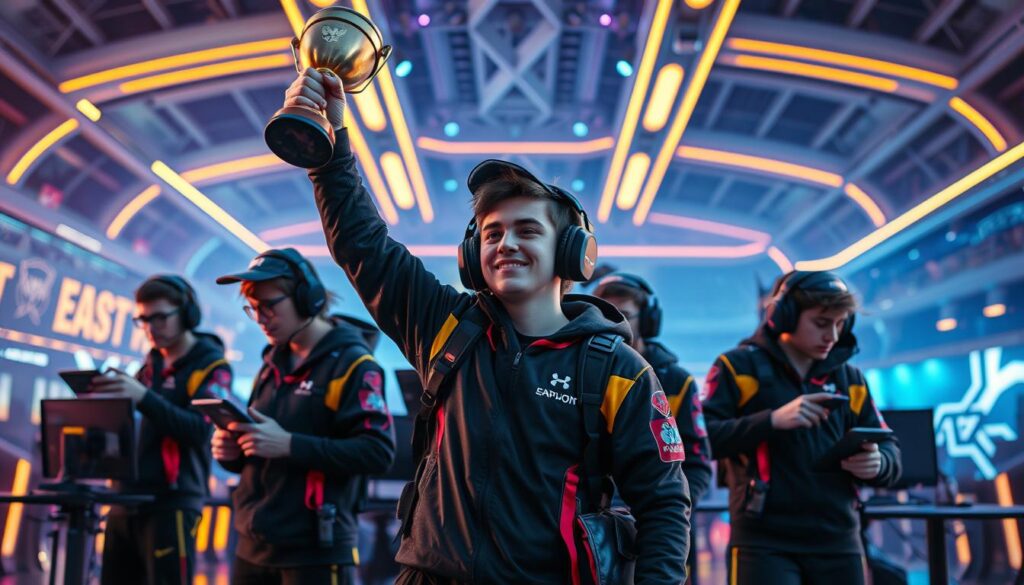
Are you the leader with clear strategies? The player whose timing is perfect? The one who can play three roles without getting tired?
Your skills get you to tryouts. But it’s your everything else that gets you on the pro team.
Your attitude speaks volumes – often louder than your game calls. Be the player who:
- Helps reset equipment without being asked
- Offers constructive feedback instead of criticism
- Shakes hands after both wins and losses
- Maintains composure when the pressure mounts
Building your personal brand goes beyond gaming. Recruiters look for community involvement. It’s like an unspoken resume item that shows you’re a team player.
Take part in local tournaments. Contribute to online communities. Include esports-related volunteer work.
And don’t forget to have interests outside gaming. Talking about architecture, cooking, or astrophysics between matches makes you more interesting than another “gamer” stereotype.
Your goal isn’t just to make the team. It’s to become the player they can’t imagine without.
When you approach tryouts with this mindset, you’re not just another contender. You’re the solution to their roster puzzle – the missing piece that completes their competitive picture.
This holistic approach turns your attempt to join the pro team into a compelling case for your indispensability.
Following Up
The final buzzer sounds on your tryout, but the real game of pro gaming recruitment has just entered overtime. Most players treat the post-tryout period like a disconnected controller – completely inactive. This is where prospects differentiate themselves from the crowd.
Timing your follow-up is like executing a perfect ultimate ability. Message too early and you seem desperate. Wait too long and you’re forgotten. The sweet spot? 24-48 hours after tryouts conclude.
Your follow-up message shouldn’t read like a generic copy-paste job. Reference specific moments from your tryout or feedback you received. Show them you were actually paying attention – a rare quality in today’s distraction-filled world.
When asking for feedback, be surgical. Instead of “how did I do?” try “what one mechanic should I prioritize improving?” This shows you’re thinking deeply and eager to improve.
Between tryouts and decisions, treat your gaming profiles like live resumes. Recruiters will check your recent matches, streaming content, and social media presence. Showing consistent activity proves your dedication.
The interview phase separates contenders from pretenders. As noted in our guide on how to join an esports team, recruiters use conversations to assess cultural fit and community presence.
| Follow-Up Mistake | Professional Approach | Why It Matters |
|---|---|---|
| Immediate results request | 24-48 hour thank you note | Shows patience and professionalism |
| Generic feedback questions | Specific improvement requests | Demonstrates analytical mindset |
| Radio silence after tryout | Continued profile activity | Proves consistent dedication |
| Burning bridges after rejection | Graceful exit with future interest | Maintains industry relationships |
Rejection isn’t failure – it’s data collection. Handle it with grace. Thank them for the opportunity, express interest in future tryouts, and never underestimate the power of a positive exit.
Remember: esports is a small world where today’s rejecter might be tomorrow’s teammate. Your follow-up strategy could be the difference between fading into obscurity and landing that coveted pro gaming recruitment spot.
Success Stories & Rejection Advice
Let’s talk about the two possible outcomes of your esports tryouts. Rejection is more common than immediate success. Welcome to the brutal reality of competitive gaming.
For the lucky few, success often comes after multiple failures. Faker wasn’t born a legend—he became one through obsessive improvement. These players treat every rejection as data collection, not personal failure.
Now for the more likely scenario: not making the cut. Here’s the hard truth—sometimes you’re just not good enough yet. That’s okay. The question isn’t whether you get rejected; it’s what you do next.
Do you quit and complain? Or do you analyze why you failed and build a training plan? Some of the greatest pros were cut from multiple teams before finding their perfect fit. Rejection isn’t the end—it’s just a detour.
Remember, esports scholarships and programs are growing rapidly. Your next attempt might be the one that changes everything. Keep grinding.