
The Hisense Xbox controversy sits at an uncomfortable point for players: cloud gaming on a TV without a console is convenient, but the TV platform involved has been named in privacy litigation tied to Automatic Content Recognition, or ACR. As of September 21, 2026, the gaming feature had been announced and rolled out for supported Hisense and VIDAA-powered TVs, while legal claims over TV viewing-data practices had not produced a reported final verdict for Hisense in the research provided.
Why The Hisense Xbox Controversy Matters
A Console-Free Pitch Meets A Data-Privacy Dispute
On January 5, 2026, Microsoft said it would bring the Xbox app to select Hisense and V homeOS-powered Smart TVs during 2026, enabling Xbox Cloud Gaming for Game Pass subscribers through the TV itself, according to the Xbox Wire announcement. That is a meaningful distribution shift for players who already own a compatible TV and do not want to buy a console or gaming PC for supported cloud titles.
The tension is not that cloud gaming on a TV is unusual; Microsoft has already positioned Xbox access across devices. The issue is timing and trust. Hisense and its TV software ecosystem were facing allegations involving ACR, a technology that can identify content shown on a screen. For gaming households, the concern is broader than which show is being watched. The research states that allegations include data collection across inputs, including HDMI devices and game consoles. If proven, that kind of claim would matter to players who use a TV as the center of a household entertainment setup.
Hisense Xbox Controversy And Consent
Consent is where the debate becomes player-facing. A cloud gaming app asks users to accept one kind of platform relationship: a subscription, an app, a controller, and streaming access to games. ACR claims raise a separate question: what does the TV operating system collect before, during, or around that play session? That makes the Hisense Xbox controversy less about whether cloud gaming works and more about whether users can understand the data environment around it.
Players are used to account sign-ins, save syncing, cloud streaming queues, parental controls, and store pages. They are less likely to expect the television itself to become a disputed data layer over HDMI inputs or console use. The allegations remain allegations unless and until proven in court, but the practical lesson for users is clear: a gaming feature can arrive on hardware that carries unrelated privacy baggage.
What Microsoft And Hisense Announced
Game Pass Access Through The TV App
Microsoft’s January 2026 announcement said the Xbox app would support Xbox Cloud Gaming on select Hisense and V homeOS-powered smart TVs. The research also states that Hisense confirmed on August 26, 2026 that support was rolling out through the Xbox app to Hisense and VIDAA OS-powered Smart TVs from model years 2024 through 2026 via an update to VIDAA OS 9.6. Availability was described as covering more than 25 markets, including the United States, the United Kingdom, Germany, and Brazil.
From a player perspective, the value proposition is easy to understand. A supported TV, a compatible Bluetooth controller, a Game Pass subscription tier with cloud access, and a stable connection can reduce the number of devices needed to play. It may help players in households where a console purchase is hard to justify, or where gaming happens in a shared living room rather than at a desk.
Subscription Friction Still Matters
The research states that Essential, Premium, and Ultimate Game Pass tiers were tied to cloud access, with tier differences affecting streaming quality. That matters because TV-based cloud gaming does not remove monetization questions; it shifts them. Instead of a single hardware purchase, some users face an ongoing subscription decision, controller compatibility needs, and the limits of streamed play. For families, that can make spending feel smaller month to month while still requiring attention to recurring charges.
Cloud access on a TV can be useful, but it is not the same as owning a local console copy or having a game installed on a PC. Availability can depend on catalog rights, account status, streaming performance, and the TV platform’s app support. For readers tracking gaming hardware and home entertainment choices, related gaming hardware coverage at coolermastergaming.com can offer insight into the broader market, although the privacy concerns in this instance focus on smart TV software issues.
Legal Claims Around ACR And TV Data
What The Texas Case Alleged
On December 15, 2025, Texas Attorney General Ken Paxton filed suit against Hisense and four other TV manufacturers under the Texas Deceptive Trade Practices Act. The state alleged that companies unlawfully collected and transmitted viewing data through ACR, including screenshots as often as every 500 milliseconds, and described the practice as a “mass surveillance system” in its public statement, according to the Texas Attorney General release.
The research also says Texas obtained a temporary restraining order on December 17, 2025 that prohibited Hisense from collecting, using, selling, sharing, disclosing, or transferring ACR data about Texans while the lawsuit proceeded. As of September 21, 2026, the research states that Samsung and LG had reached settlements with Texas, while cases involving Hisense, Sony, and TCL remained active, with no reported settlement or final verdict for Hisense.
The Federal Class-Action Layer
The research describes a separate federal class-action lawsuit filed on May 12, 2026 in the Northern District of California. It states that the complaint alleged Hisense ACR technology captured images and audio from the TV screen as often as every 500 milliseconds across all inputs, including HDMI devices and game consoles, and sent data with household or device identifiers to its Chinese parent company. The complaint was described as naming 14 causes of action, including alleged violations of the Video Privacy Protection Act, the Federal Wiretap Act, California privacy laws, and breach of implied contract.
Those are serious claims, but they should be read cautiously. A complaint is not a finding of liability. The available research does not state that Microsoft was named as a defendant in those ACR cases, and it does not show that the Xbox app itself was accused of collecting the disputed ACR data. The safer reading is that cloud gaming arrived on a TV platform facing legal scrutiny over separate smart TV data practices.
What Players Can Reasonably Take From The Claims
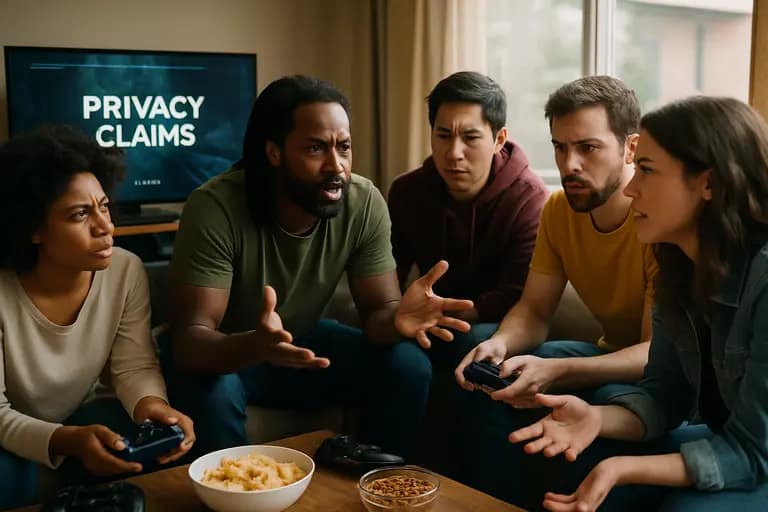
Practical Questions Before Using TV-Based Cloud Gaming
Players do not need to become privacy lawyers to make better choices. They can ask direct questions about the device they already own or plan to use. The most relevant issues are not only frame rate or streaming resolution, but whether the TV setup process clearly explains ACR, whether data sharing can be declined, and whether disabling such features is simple.
- Check whether ACR or viewing-data features are enabled during TV setup.
- Review privacy menus after major TV operating-system updates.
- Separate Xbox account privacy settings from TV manufacturer privacy settings.
- Consider whether a streaming stick, console, or TV app gives the most control for a household.
The research says the Texas petition accused Hisense of using “dark patterns” during setup, including a one-click opt-in while opt-out controls were allegedly buried across multiple menu steps. It also states that there was allegedly no visible indicator showing that ACR was actively capturing content. If those allegations are accurate, the burden would fall heavily on consumers to find settings that many users may not know exist.
Community Trust Is Part Of Platform Adoption
Gaming communities often judge platform changes through lived experience: Does the app work? Is input delay acceptable? Are games easy to find? Does the subscription feel fair? Privacy disputes add another layer. A technically useful feature can still face skepticism if players believe the surrounding device platform is unclear about data collection.
That trust issue is especially relevant for families and shared households. A television may be used by children, visitors, roommates, and people who never agreed to a gaming account’s terms. Smart TV privacy controls can affect more than the person holding the controller. Player-focused analysis should treat that as part of the product experience, not as a side issue reserved for legal filings.
The Player Trade-Off In The Hisense Xbox Controversy
Convenience Should Not End The Privacy Discussion
For players, the Hisense Xbox controversy is not a simple yes-or-no story about cloud gaming. The Xbox app on supported Hisense and VIDAA-powered TVs may make Game Pass more accessible to households that lack dedicated gaming hardware. That is a real consumer benefit, especially for people who want occasional access to a large game catalog without adding another box under the TV.
At the same time, the legal issues around ACR show why platform convenience deserves scrutiny. The relevant question is not whether players should reject TV-based cloud gaming outright. It is whether TV makers, platform holders, and app distributors give users clear controls, plain-language disclosures, and meaningful choices before entertainment hardware becomes a data-collection point. As of September 21, 2026, the lawsuits involving Hisense described in the research had not resolved into a final public verdict for the company. Until that changes, cautious players may reasonably treat privacy settings as part of the gaming setup, not an afterthought.