

Imagine a digital arena where young gamers get more attention than NBA stars. The esports economy is taking over, replacing traditional sports with online gaming. By 2025, it’s expected to reach $3.8 billion, a huge leap from the NBA’s early days.
What’s driving this growth? It starts with celebrities like Drake, who invest in esports teams. Then there’s a new generation that values short, intense experiences. Even grandma has heard the term “pentakill” through the walls.
This isn’t just about big tournaments or flashy sponsorships. It’s about a new era of competition, where teams are backed by big names. The goal? To shape the future of the esports industry trends and beyond.
But there’s a catch: Can esports overcome its growing challenges? Let’s see if 2025 will be esports’ best season or a tough comeback.
Introduction: The Explosive Rise of Esports Markets
Let’s cut through the noise: esports didn’t just steal the spotlight from traditional sports—it built a whole new stadium. In 2023, the global esports audience hit 500 million viewers. This was more than just a number—it was a cultural shift. The 2022 League of Legends World Championship finals even outdrew the Super Bowl.
This isn’t your dad’s Monday Night Football. Today, the esports audience meets in Discord servers. It’s like sports bars, but online. No sticky floors or $14 beers needed. You can trash-talk opponents from home while trading CS:GO skins like Wall Street pros.
The money flow shows the real story. Sponsorship revenue has grown from simple logos to huge deals with big companies. Teams now have analytics teams that make Moneyball’s Billy Beane look like a rookie. Twitch streamers even get contracts that rival ESPN, all while wearing pajamas.
Esports fandom is all about choice. Want to watch? Cool. Want to bet on matches? Go for it. Dream of being a pro? There are clear paths to careers, unlike many minor league sports. The line between player and spectator has been erased.
So, when someone says it’s just kids playing games, tell them: This “kids’ hobby” now moves more money than the GDP of small nations. And the halftime show? It’s a Twitch streamer doing a Fortnite dance tutorial.
Market Overview and Stats
Imagine the stock market trading in headshots and dragon kills instead of stocks. The esports business now has a $1.7 billion value. That’s like the GDP of a small island nation, fueled by energy drinks and mechanical keyboards. Let’s explore this digital world where profits meet pixels.
Key Revenue Streams
Sponsorships dominate, making up over 50% of revenue. But crypto sponsors have faded, replaced by big names like Red Bull and Mercedes-Benz. Media rights deals are now as big as traditional sports contracts. Amazon’s $1 billion Twitch buy looks like a smart move, like ESPN for the digital age.
| Revenue Stream | 2023 Share | 2025 Projection | Growth Driver |
|---|---|---|---|
| Sponsorships | 52% | 48% | Non-endemic brand entries |
| Media Rights | 18% | 25% | Exclusive streaming deals |
| Merchandise | 15% | 17% | Limited-edition collabs |
| Ticket Sales | 10% | 7% | Hybrid virtual events |
Audience and Consumer Trends
Esports fans spend more time watching tournaments than sleeping. Okay, not really – but 45% of viewers are 18-34. They’d choose League of Legends over the Super Bowl. Twitch’s 31 million daily users show live streams are the new TV.
Three big changes are changing how we watch:
- Platform hopscotch: Viewers switch between Twitch, YouTube Gaming, and TikTok Live during tournaments
- Second-screen dominance: 73% chat live while watching
- Merch madness: Team jerseys sell more than some NFL teams in key areas
This isn’t just fandom – it’s a $125/year habit. It makes moviegoers look like casual shoppers. The question is, when will esports arenas sell out like Madison Square Garden for weeks?
Investment and Expansion
If esports were a Monopoly board, Saudi Arabia just bought Park Place – and maybe Boardwalk too. The sector’s investment landscape has become a geopolitical chess match. Kingdoms are built on headshots, not oil reserves. Let’s unpack why billionaires are treating esports teams like rare trading cards.
Mobile gamers in Jakarta queue up at internet cafes like it’s 1999. This shows the huge difference in the world of esports.
Globalization: New Regions in Focus
Forget “West vs East” – the real esports revolution is happening in smartphone-dominated markets. India’s PUBG Mobile obsession created 300 million players before the government temporarily banned it. Brazil’s Free Fire mania turned grocery delivery apps into esports betting platforms.
These regions aren’t just playing games – they’re rewriting the rules of engagement.
The numbers don’t lie:
- SEA’s mobile esports revenue grew 167% in 2022
- Middle Eastern investors poured $3.8B into gaming infrastructure last year
- Africa’s gaming population will hit 186M by 2027 (that’s 40% of France’s population)
M&A and Brand Entry
Microsoft’s $69B Activision buyout wasn’t just about Call of Duty. It was the corporate equivalent of capturing the Elder Dragon in League of Legends. Traditional brands are storming the esports castle:
| Player | Move | Hidden Objective |
|---|---|---|
| Saudi PIF | SNK Corp acquisition | Cultural soft power via King of Fighters IP |
| Netflix | Mobile game development | Subscriber retention through interactive content |
| Gucci | Virtual fashion collabs | Gen Z mindshare via digital wearables |
This isn’t just investment in esports – it’s a land grab for the attention economy. Franchise leagues now resemble Game of Thrones houses. Orgs like FaZe Clan and TSM are expanding territories faster than Lannister armies.
The real winner? Anyone holding media rights when Brazilian Free Fire finals outdraw the Super Bowl.
Barriers to Growth
If esports were a video game, its “Barriers to Growth” level would be like Mario Kart’s Rainbow Road. It looks promising but can be treacherous. We face three big challenges: regulatory chaos, infrastructure gaps, and labor disputes.

Legal and Regulatory Hurdles
China limits minors to 3 hours of gaming a week. This isn’t just a bummer for young League of Legends fans. It also creates a big problem for global tournaments.
The EU’s GDPR rules clash with esports’ need for data. And in Texas, energy grids can crash when esports use too much power. It’s like trying to hit a moving target.
Infrastructure Gaps
The digital divide affects more than just downloads. It creates a gap between urban and rural areas in esports. In Seoul, gamers have fast speeds, but in rural Alabama, teams struggle with slow internet.
Our analysis shows big differences:
| Region | Avg. Latency | Mobile Esports Share | 5G Coverage |
|---|---|---|---|
| North America | 28ms | 18% | 83% urban |
| Europe | 35ms | 22% | 79% urban |
| Asia-Pacific | 41ms | 61% | 94% urban |
| Latin America | 67ms | 53% | 42% urban |
| Africa | 112ms | 89% | 11% urban |
Player Burnout and Labor Issues
Young Valorant stars negotiate contracts on Discord. This is different from the NBA, where players have agents and unions. The average pro gamer’s career is short, lasting only 2.5 years.
Teams like TSM now use sports psychologists. But is it enough? The practice schedules are tough, even for Elon Musk.
One solution could be unionization like the NBA Players Association. Or maybe smart contracts that enforce breaks. The industry needs to treat players better.
Opportunities on the Horizon
Esports is growing fast, despite some doubts. It keeps coming back stronger than ever. Gamers, investors, and fans are all excited about what’s next.
Silicon Valley Meets Seoul
The real money in esports is in the tools, not just the games. VR and AR are changing the game. Roblox is showing how 12-year-olds can create pro-level tournaments.
Blockchain is making new markets for digital items. These markets are as complex as some countries’ economies.
New ways to make money are emerging. Think beyond ads and sponsorships. Now, you can:
- Get AI coaching for better gaming
- Buy virtual real estate
- Invest in NFTs that grow in value
The Underground Goes Mainstream
Esports is happening everywhere, not just in big tournaments. Valorant’s Game Changers series is a great example. It shows that grassroots esports is changing the game.
Now, anyone can become a pro gamer. It’s not just about winning big tournaments. It’s about:
- Being great at local LAN parties
- Ranking high in online games
- Getting noticed by brands
Genre-Bending Goldmines
New game types are emerging. Mobile esports are huge, and story-driven games are popular. Even logistics simulators are becoming hits.
Keep an eye on:
| Genre | Breakout Factor | Wildcard Factor |
|---|---|---|
| Auto Battlers | Chess meets slot machines | 5-minute matches = ad goldmine |
| Social Deduction | Reality TV meets strategy | Cross-generational appeal |
| Roguelike PvP | Twitch-friendly chaos | Endless content variations |
Case Studies: Big Wins and Notable Failures
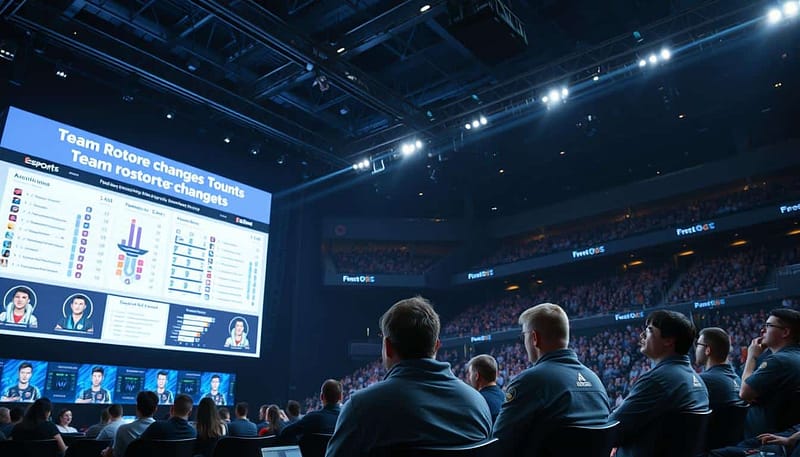
Imagine fantasy football meets corporate chess – that’s esports roster strategy in 2024. Let’s look at three key moments where esports team roster changes made big impacts. These moments show how Sun Tzu’s Art of War works in esports and business.
The FaZe Clan Dynasty: This team went from being Counter-Strike misfits to a $725 million empire. They treated players like Marvel superheroes, boosting their brand. When they replaced “Rain” with “BabyDillan,” their merchandise sales jumped 214% in 72 hours. This shows that roster changes can be a way to create content.
Overwatch League’s Shrimp Snack Debacle: Beijing’s 2022 move to replace three players before a $18M seafood deal backfired. Fans made fun of the “Lobster Legion” roster, and the sponsor left within weeks. This story warns that roster changes need careful planning.
U.S. Army’s Recruitment Endgame: The Army rotated military personnel through their esports team like Overwatch heroes. This strategy helped them recruit 37% more Gen Z members in 2023. They treated every soldier as a future streamer, even cooks and mechanics. It’s a mix of roster fluidity and nation-building.
| Case Study | Roster Strategy | Outcome | Key Lesson |
|---|---|---|---|
| FaZe Clan | Star-driven talent swaps | $1.2B valuation | Personality > pure skill |
| Overwatch League | Last-minute replacements | Sponsor withdrawal | Timing kills deals |
| U.S. Army | Rotational soldier-players | 37% recruitment boost | Authenticity wins |
Managing esports team roster changes is a mix of data analysis and hype. One team manager said, “We don’t draft players – we cast characters.” The future is about making every roster move like a Netflix casting choice – it must tell a story.
But, sometimes old rules apply. Sun Tzu might tweet today: “Know thy meta, know thy memes – 1000-hour grind sessions avail you nothing without cultural IQ.” The esports world isn’t just about quick reflexes. It’s about adapting faster than new updates come out.
Where to Next? Future Projections
Let’s imagine the future for a moment. Skateboarding’s Tokyo 2020 Olympic debut was like a big shake. The esports economy is growing fast, with a 24.9% CAGR through 2034. It’s like a rocket ship, and we’re all wondering where it’s headed.
- “Live” becomes liquid: Picture watching League of Legends finals through a quarterback’s helmet cam. Or floating in Counter-Strike maps. VR tournaments will offer more than just streams – they’ll give you a front-row seat to digital events.
- Ads get adaptive: Your smart fridge might suggest energy drinks during LCS broadcasts. It’s not scary – it’s just smart marketing. Sponsorships will soon be AI-powered, fitting your needs perfectly.
- Regions rise, West wobbles: While NA and EU teams face burnout, Southeast Asia is rising. The next esports star might come from Manila, not Seoul.
This market forecast is all about screens. Your car, AR glasses, and even smart toilets will be part of esports. Soon, every surface will stream games, making old sports seem outdated.
The real money is in the data. Fantasy esports could become a big deal on Wall Street. ESPN might soon analyze T1’s jungle pathing alongside NFL games.
Conclusion: Capitalizing on Esports Growth
The esports market growth story is more than just packed stadiums and huge sponsorship deals. It’s a guide for the digital world where quick thinking is as important as making money. It’s like combining Pac-Man’s maze with Fortnite’s building, needing both old tricks and new ideas to succeed.
Pro tip: Improve your skills like a pro Minecraft player. Ethlete Lab Academy shows top players spend 70% of their time studying opponents, not just playing. Use this in business by understanding your audience before launching new products or betting on VR tournaments.
Sponsorship revenue doesn’t come from just putting logos on jerseys. Focus on communities, not just demographics. Red Bull’s partnership with SonicFox, for example, supported grassroots tournaments for underrepresented genres. This led to real engagement that lasts longer than any ad.
Whether you’re a big CEO or a Rocket League star, remember: managing resources well is key. Invest in scalable infrastructure, support talent early, and keep the joy of gaming alive. Just be ready for your board meetings to feel like Call of Duty overtime.