

Remember when gaming was just about basement LAN parties and Mountain Dew? Now, in 2025, we see a $5 billion gladiatorial coliseum where tech, culture, and money meet. It’s not just your little brother’s Counter-Strike anymore.
While Silicon Valley focuses on AI, Tel Aviv’s gaming scene saw a 31% revenue surge last quarter. This shows the real action is happening far from Silicon Valley. Gen Z isn’t just playing games. They’re building digital economies and making Twitch rivals into Wall Street stars.
What’s driving this growth? Hybrid events that mix VR with real-world merch drops. Regional leagues are turning local gamers into hometown heroes. The pandemic-era boom was just the beginning.
We’re seeing three big changes:
• Blockchain-backed player contracts changing ownership rules
• AI coaches analyzing micro-expressions during key moments
• TikTok-fueled audiences wanting highlight reels before halftime
Forget “game over” – the smart money is doubling down. As traditional sports struggle with aging fans, esports is creating a new playbook. It’s making the NFL look like dial-up internet. Are you ready to level up?
Introduction: The Dynamic State of Esports
Remember when esports was seen as just a hobby for teens? Now, in 2025, we see big investments in esports by pension funds. Your aunt might even talk about Valorant strategies. Esports has grown from a small interest to a big part of culture, sneaking into the 18-34 demographic that doesn’t like traditional ads.
Let’s look at some numbers: 68% of Gen Z plays esports every week, but 83% use ad-blockers. It’s not just about gaming; it’s about winning the attention of a whole generation. That’s why Bud Light sponsors fighting game tournaments and CNN shows League of Legends finals.
The New Audience Playbook
Traditional sports are trying to keep up. Here are some stats:
| Demographic | Weekly Esports Hours | Preferred Platform | Ad Resistance Score |
|---|---|---|---|
| Gen Z (18-24) | 14.2 | TikTok Live | 92% |
| Millennials (25-34) | 9.8 | Twitch | 78% |
| Gen X (35-54) | 5.1 | YouTube Gaming | 61% |
Younger viewers are more resistant to ads. Esports has learned to focus on being real, not interruptive. When a pro player drinks an energy drink during a game, Gen Z sees it as a cool tip, not an ad.
This shift isn’t just changing entertainment; it’s changing how we do business. Why are big companies hiring “Chief Gaming Officers”? It’s because they need to understand the new media habits of younger people. The future of esports is about being a key part of youth culture, not just about bigger events or better graphics.
Market Growth and Financials
If esports were a tech stock, analysts would shout “buy the dip” loudly. The industry’s finances are booming, rivaling the excitement of a League of Legends game. It’s making traditional sports owners take a closer look at their finances.
Revenue: Where the Pixels Meet the Paychecks
The $5 billion revenue forecast for 2025 is huge. It’s like Tom Brady unretiring all over again. But here’s the interesting part: 38% of this revenue comes from non-endemic sponsors. It’s like energy drink companies fighting for team patches like medieval knights.
Egypt’s 11% annual growth rate is impressive. It’s because of affordable gaming cafes and high youth unemployment. It’s like a Rocket League revolution. Imagine the excitement of pyramids and shawarma breaks between games.
Investors: From Oil Barons to A-Listers
Saudi Arabia’s Public Investment Fund has a big stake in esports. It’s even bigger than some teams’ Discord members. Hollywood stars are getting in on the action too:
- Ryan Reynolds’ Maximum Effort owns part of Faze Clan
- Post Malone’s buying up ownership like battle royale wins
- Even Succession‘s Logan Roy prototype Rupert Murdoch tried to buy ESL
Team valuations are skyrocketing. Cloud9’s worth is $700 million, which is like buying 23% of the Denver Broncos. The reason? Merchandise sales are booming, thanks to designer collabs and limited NFT drops. Your grandma’s mousepad collection is now trendy.
Viewer Engagement and New Platforms
Mobile esports has changed how we watch games. No longer do you need a pricey gaming setup to join in. It’s all about how streaming trends and small screens are changing sports.
Streaming Innovations
Vertical video is now big, thanks to Instagram Reels and TikTok. They host live tournaments perfect for short breaks. Here are some key changes:
- AI commentators give quick analysis in 15-second clips
- Viewers can vote on game strategies during matches
- 79% of esports fans watch on mobile devices (YouTube Shorts beats Twitch)
Jakarta’s Free Fire shows the power of short, vertical games. It’s fast, easy, and makes $1B a year. Your grandma’s TV package is outdated.
Mobile Esports Boom
Why wait for a PC game when your phone is a stadium? The mobile esports boom is based on three key points:
- Accessibility wins over graphics (bye-bye, console wars)
- New stars rise fast, like TikTok dances
- Brands follow viewers to mobile screens
Latin American COD Mobile leagues are as popular as soccer. College teams look for Clash Royale players. Your smartwatch might host a tournament soon.
Tech and Hardware Advances
Remember when Tony Stark’s holographic interfaces felt like sci-fi? Today, gaming technology makes them seem old-fashioned. The line between player and machine is blurring fast, changing esports forever.
VR and AR Integration
Virtual reality is no longer just for basement dwellers. Major leagues now host VR tournaments with big prizes. The Meta Quest Pro’s eye-tracking lets players literally out-stare opponents, while PlayStation VR2 makes Counter-Strike matches intense.
Augmented reality takes it even further:
- Live events project stats onto stadium walls like Minority Report billboards
- Training sims have holographic coaches that dissect your twitch reflexes
- Fan experiences let you high-five digital avatars of pro players
| VR Headset | Resolution | Tracking Tech | Esports Adoption |
|---|---|---|---|
| Meta Quest Pro | 1800×1920 per eye | Face/eye tracking | VR League, Beat Saber |
| Valve Index | 1440×1600 per eye | Finger motion | Half-Life: Alyx tournaments |
| PS VR2 | 2000×2040 per eye | Haptic feedback | Gran Turismo 7 leagues |
Performance Analytics Tools
Today’s pros analyze brainwave patterns and micro-sweat levels. Mobalytics uses AI to predict when you’ll tilt before you even notice. Teams use biometric trackers so precise, they could probably diagnose your childhood trauma.
Key innovations changing the game:
- EEG headsets measure focus like a neurosurgeon’s toolkit
- Smart gloves track finger fatigue across 28 pressure points
- AI coaches adjust strategies based on real-time cortisol levels
| Tool | Metrics Tracked | Pro Teams Using | Price Range |
|---|---|---|---|
| Mobalytics | APM, decision latency | TSM, G2 Esports | $99-$499/mo |
| Fitbit Sense 2 | Stress, sleep quality | Cloud9, FaZe Clan | $299 |
| FocusCalm | Neural engagement | 100 Thieves | $1,200 |
This isn’t just gear – it’s digital Darwinism. Players who ignore these tools are at a disadvantage. The future belongs to those who merge human instinct with machine precision, creating hybrids that’ll make today’s pros look like Pac-Man ghosts.
Organizational Shifts
The days of cafeteria debates about athletic superiority are over – today’s letterman jackets come with USB ports. Traditional sports infrastructure is now colliding with gaming culture. This is changing how competitive gaming organizes itself.
We’re seeing why your nephew’s Rocket League scrimmage now has more support than your fantasy football league. It’s all about the shift in how we view competitive gaming.
Franchise Leagues: Wall Street Meets Winner’s Circle
Esports organizations are now more like traditional sports franchises than LAN party collectives. The Overwatch League’s city-based teams and Valorant’s partnership program show a clear pattern. Big money demands professional structures.
But there’s a twist. Creator-led squads like 100 Thieves and FaZe Clan prove that personality-driven teams can compete with corporate-backed giants.
| Model | Investment | Audience Growth | 2025 Projection |
|---|---|---|---|
| Franchise Leagues | $20M+ buy-ins | 12% YOY increase | Global expansion |
| Creator Teams | Brand partnerships | 28% YOY increase | Cross-platform dominance |
| College Programs | NCAA scholarships | 41% YOY increase | Varsity sport status |
Scholarships for Headshots: The New College Sports Arms Race
175+ U.S. colleges now offer esports scholarships – more than Division I hockey programs. Universities like Boise State and Miami Ohio are building gaming lounges. They’re recruiting Fortnite players with the same intensity Alabama recruits five-star quarterbacks.
Why? Esports sponsorships follow the youth: 72% of collegiate gamers are aged 18-24, advertisers’ golden demographic.
High schools aren’t far behind. The National Federation of State High School Associations now recognizes esports in 22 states. When a Texas school’s CS:GO team outsells their football program in merch revenue, we’ve reached a cultural tipping point.
This isn’t just about competition – it’s about preparing Gen Alpha for careers in streaming, game design, and yes, professional play.
As organizational structures evolve, so do audience demographics. The kid screaming at a Twitch stream today could be tomorrow’s team owner – provided they remember to do their math homework first. Next stop? Seeing which traditional sports franchise will be first to draft an AI coach.
Diversity and Inclusion Initiatives
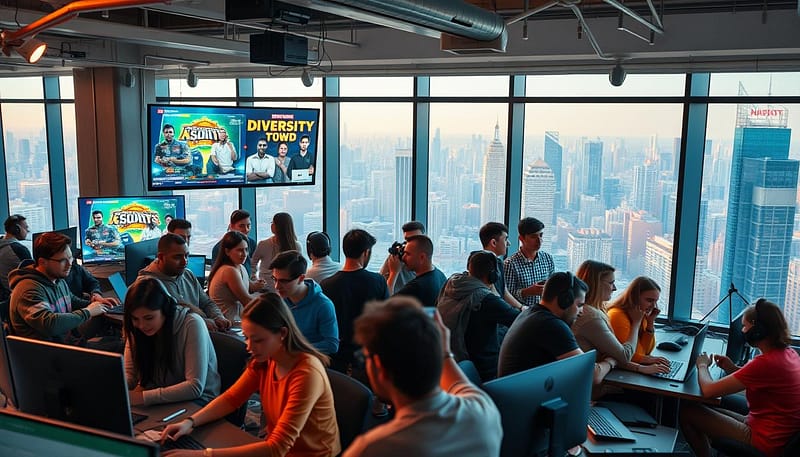
The esports world is changing fast. It’s no longer just one voice; it’s a mix of many. We’re seeing real changes, not just empty promises. This is because 47% of gamers worldwide are women, and ignoring them is like trying to play Valorant with a trackpad.
Women in Esports: More Than Just Lip Service
Brazil’s Free Fire female champions are breaking stereotypes fast. Riyadh has invested $3B in inclusive arenas. Hijabi streamers are leading in MENA’s Mobile Legends scene. It’s clear that the old days of LAN parties are over.
- Female-led teams are getting sponsorships from Red Bull and Logitech.
- Viewership for women’s tournaments has jumped 214% in two years.
- College scholarships for female players have tripled in 2024.
Regional Growth: Where the Action’s Hotter Than a GPU
While North America rests on old franchises, three regions are leading the charge:
| Region | Growth Driver | Audience Shift |
|---|---|---|
| LATAM | Mobile adoption (+62% YoY) | Non-endemic brands entering via Free Fire |
| Asia | Government esports visas | 40+ age demographic tuning in |
| EMEA | Saudi-backed infrastructure | Localized content in 18+ languages |
Latin America has turned esports growth into a cultural movement. It’s like the excitement of fútbol meets the thrill of League of Legends finals. Riyadh is investing big in diversity, like it’s buying the Battle Pass for the Middle East.
Sponsorships and Media Rights
Remember when Mountain Dew and Doritos were big in gaming sponsorships? Those days are over, fast. Now, esports sponsorships are like big business deals. They have huge money involved and creative marketing that beats Super Bowl ads.
New Brand Partnerships: From Fast Food to Fintech
Why is Mercedes-Benz making League of Legends skins instead of F1 cars? It’s because digital ads are better than old-school billboards. When MrBeast’s Burger Fingers sponsors a Valorant team, it’s more than just a logo. It’s about being the talk of Twitch and TikTok.
The sponsorship game has changed:
- Creator-owned teams (like Ninja’s Luminosity Gaming deal)
- In-game crypto wallets (Coinbase’s CS:GO deal)
- Virtual product drops (Puma’s Roblox sneakers)
TV and Streaming Rights Deals: The New Gold Rush
Amazon’s $1 billion Overwatch League deal shocked everyone. It started a battle for streaming dominance. Now, streaming trends show that:
| Platform | 2025 Deal Highlights | Viewer Reach |
|---|---|---|
| Twitch | Exclusive Call of Duty mobile streams | 12M concurrent |
| YouTube | AI-personalized Dota 2 tournaments | 8M VOD views/day |
| TikTok | Vertical-format Rocket League shorts | 23B hashtag views |
These aren’t just deals. They’re big moves to shape culture. When Disney+ competes with ESPN for EA Sports FC rights, traditional sports are worried.
Challenges and Opportunities
Esports has grown into a billion-dollar industry, but it’s not all sunshine. There are big challenges, like unclear rules and players burning out quickly. Let’s look at the real issues facing esports.
Regulation and Fair Play
The esports world is like a choose-your-own-adventure book. Scandals and cheating have made “fair play” a buzzword. Regulatory changes are coming fast:
- New age limits for pro contracts (bye, 14-year-old COD stars)
- Standard anti-cheat measures across platforms
- Crypto sponsorship rules to avoid big losses
The big challenge is making rules that keep esports exciting. We don’t want it to feel as strict as golf.
Player Well-Being and Burnout
Studies show 68% of pro gamers face serious injuries. Mental health issues are also big concerns. The solution? Spending more money:
| Issue | Old Approach | New Solutions |
|---|---|---|
| Physical Health | Energy drinks & painkillers | Mandatory physio sessions |
| Mental Health | “Git gud” mentality | Team psychologists |
| Career Longevity | Retire by 25 | Post-career transition programs |
Smart teams now treat players like athletes. The future of esports depends on finding a balance. We need careers that last, not just broken thumbs.
These challenges also offer big chances. Fix the rules, and esports becomes a real sport. Improve player care, and you create lasting careers. Who’s ready to press the respawn button?
Predictions: What’s Next for Esports Industry
Imagine if future of esports included quantum computers figuring out nacho cheese distribution. Let’s look beyond the hype and influencer deals to see where gaming technology is really going.

Web3 is coming, and it will change how we own teams. Imagine squads run by fans using governance tokens for decisions. It’s like “Survivor: Esports Edition” meets blockchain. These teams might compete in virtual arenas where NFTs are more valuable than your gaming setup.
AI is already changing commentary, faster than a Twitch chat can spam “F.” OpenAI’s commentary beta can write play-by-plays like Shakespeare. Will AI analysts critique missed ultimates better than humans? Gaming technology is betting on it.
But, the future of esports isn’t all about drones and neural interfaces. Maybe stadiums will get edible nachos right, and VR fans can virtually throw tomatoes at bad calls. Sounds like progress to me.
Conclusion: Adapting for Tomorrow
The esports world is not just getting better; it’s changing the game completely. With almost 500 million fans worldwide, it’s growing fast. But the biggest challenge is keeping fans interested for more than a few years.
Player loyalty is a big surprise, like something from Metal Gear Solid. 40% of fans support individual players over teams. This means teams need new ways to keep fans coming back. Sponsors, take note: 70% of viewers like gaming hardware ads during games.
Now, the focus is on being sustainable. This includes green server farms and programs to prevent athlete burnout. The esports world is looking at new ways to grow, like Asia-Pacific and Latin America.
The ultimate goal is to make esports a lasting part of culture. With half the fans not betting on games, the industry must keep evolving. It’s not over yet; it’s just getting started.