

You’ve seen the grind. You know the player: the one who logs 12-hour sessions, chasing rank with bloodshot eyes. They think more screen time is the only way to greatness. They’re like a hamster on a wheel—running hard but getting nowhere.
In competitive gaming, the “grind” is seen as a badge of honor. But what if the key to success isn’t just more hours? A smart esports training plan shows that’s not true.
Structured training is more than just a schedule. It’s a way to improve in a systematic way. Elite athletes see up to a 10% boost in performance and a 50% drop in injuries with structured programs. It’s not just about playing more; it’s about playing smarter.
The 5-4-3-2-1 method is a great example of this. It’s a structured, repeatable process that builds skill with precision. It’s the difference between a jazz musician improvising and a concert violinist playing perfectly. One is chaotic; the other is a masterclass in control.
So, before you start another long gaming session, ask yourself: are you training, or just grinding?
Skill prioritization by role
Forget trying to master every role on the battlefield. In competitive gaming, you’re either the safecracker, the wheelman, or the mastermind. Each role has a unique skillset. Trying to be all roles at once is a sure way to fail.
In esports, a support main in League of Legends has a different job than a DPS in Valorant. Your esports training plan must reflect that. It’s not about grinding more; it’s about grinding smarter.
The Long-Term Athlete Development (LTAD) model gives us a master key. It outlines stages like “Learning to Train” and “Training to Train.” It emphasizes fundamental movement before specialization.
In esports, your “speed” might be APM (Actions Per Minute) or reaction time. Your “skill” is game sense. Trying to master advanced smoke line-ups in Valorant before you can consistently land headshots is like trying to perform a heist without learning to pick a lock.
The Role-Specific Skill Hierarchy
Every role in a team composition has a core function. Your training must reflect that function. A main tank’s skill priority is not the same as a flex support’s. Think of it as a project manager’s Gantt chart for your own development.
| Role Archetype | Primary Skill Priority | Secondary Focus | Critical Trainability Window |
|---|---|---|---|
| Main Tank/Initiator | Map Awareness & Space Control | Cooldown Tracking, Ultimate Economy | Game Sense & Decision Making |
| DPS/Fragger | Mechanical Aim & Positioning | Crosshair Placement, Recoil Control | Reaction Time & Flick Shots |
| Support/Healer | Cooldown & Resource Management | Positioning & Survival | Team Communication & Cooldown Tracking |
| Flex/Utility | Adaptability & Role Fluency | Ultimate Ability Synergy | Map-Specific Lineups |
For example, a tank player’s “fundamental movement skill” isn’t just dodging hooks. It’s map control and creating space. Before you master the 15th smoke lineup on Ascent in Valorant, you must drill the fundamental crosshair placement and callout discipline.
This isn’t just theory. It’s the LTAD model in action. You must “Learn to Train” your role’s core skills before you “Train to Compete.” Ignoring this is like our heist crew sending the safe-cracker to do a wheelman’s job—it’s a wipe.
This structured, role-specific approach is formalized in guides like this comprehensive skill priority guide. Your esports training plan should be a living document, not a grind schedule. Periodize your training like an athlete: focus on mechanical aim for a few weeks, then rotate to game sense and macro strategy.
Building Your Role-Specific Regimen
Your training must be as specialized as your in-game role. Here’s how to build that regimen:
- Audit Your Role’s Demands: Break down a VOD of a pro player in your role. Note their positioning, cooldown usage, and decision-making, not just their kills.
- Isolate Micro-Skills: Don’t just “play Deathmatch.” Drill specific micro-skills: 30 minutes of tracking, 30 minutes of flick shots, 30 minutes of utility usage in a controlled environment.
- Periodize Your Training: Align with the LTAD model. Early phases focus on broad, fundamental skills (e.g., crosshair placement, movement). Later phases focus on advanced, role-specific tech (e.g., one-way smokes for a controller).
This isn’t about playing more; it’s about practicing with purpose. Your role is your character class in this RPG. You wouldn’t put skill points into archery if you’re a barbarian. Identify your archetype, deconstruct its skill tree, and prioritize with the precision of a mastermind planning the perfect heist.
Practice scheduling
Creating a top-notch esports training plan is more about smart planning than endless playing. It turns random play into a well-thought-out strategy. If your practice is random, you’re just a hobbyist. But if it’s planned, you’re an athlete.
Think of your season as a book you’re writing. The macrocycle is the whole book, your year-long goal. Inside, mesocycles are chapters, 4-6 week blocks for mastering a skill, like a new agent in Valorant or jungle pathing in League of Legends. Each week, your microcycle is the daily page count, a 2-hour session on a specific skill. This method is backed by performance science in traditional sports.
Elite players use block periodization as their secret weapon. They don’t just play to get better. They focus on one skill at a time. A two-week block might be “Game Sense,” with 70% of training on VOD review and theory. The next block could be “Mechanical Peak,” with aim trainers and drills.
This structured approach keeps the brain challenged and prevents burnout.
Here’s what a microcycle (a weekly schedule) for a pro might look like:
| Day | Morning (Skill Isolation) | Afternoon (Applied Practice) | Evening (Analysis) |
|---|---|---|---|
| Monday | Aim Trainer & Mechanics Drills | Ranked Solo Queue (Focus: Map Awareness) | VOD Review of own laning phase |
| Tuesday | New Agent/Champion Mechanics | Scrimmage (Team Comms Focus) | Team VOD Review Session |
| Wednesday | Targeted Weakness Drill (e.g., last-hitting) | Focused Ranked Play (1-2 specific goals) | Watch Pro VOD (Specific Role) |
| Thursday | Reaction Time & Reflex Drills | Scrimmage (Tournament Rules) | Individual VOD Review |
| Friday | Free Practice / Mechanics | Official Team Scrim | Team Strategy Review |
This isn’t about playing more hours. It’s about playing the right hours. Your brain needs progressive overload and recovery. Schedule your VOD reviews like film study, aim training like drills, and scrimmages like rehearsals.
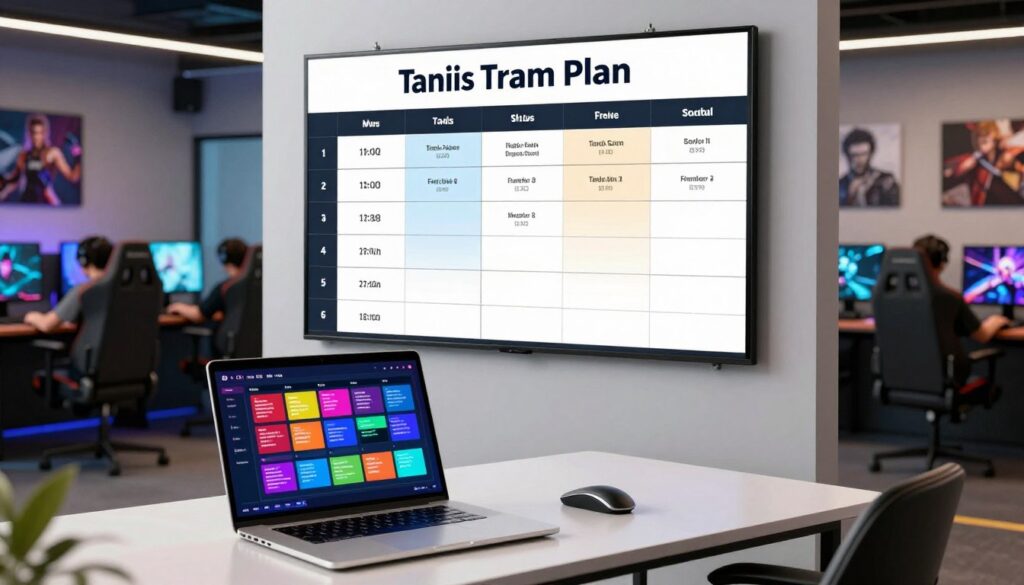
The key difference between pros and amateurs is their schedule. Amateurs play to get better. Pros improve by 1% in a specific skill each day. They don’t just play; they follow a plan. Their schedule is the blueprint for becoming a champion.
VOD review routines
Ever watch your own replay and feel a deep cringe? That’s your ego deflating and your skill level growing. VOD review isn’t about watching your best moments. It’s a forensic audit of your gameplay. This makes you an active analyst of your own performance.
Structured review identifies root causes, leading to deliberate practice. Over time, you’ll see chartable patterns. That’s your personal meta, and it’s the only leaderboard that matters.
Serious competitors also protect their systems as part of performance optimization. Malware, background processes, and intrusive software can quietly impact FPS stability and latency. Staying informed through trusted cybersecurity resources like Best Antivirus Pro ensures your setup remains secure so your performance isn’t compromised by avoidable technical issues.
The Analyst’s Mindset: From Player to Detective
Forget being a player for a moment. You are now a detective, and your last match is the crime scene. Your K/D ratio is evidence, not the verdict. The goal is to understand the why behind every mistake.
This shift from player to analyst is a big upgrade to your esports training plan. You’re not just looking for mistakes. You’re looking for patterns and decision-making loops.
Structuring Your Forensic Review
Randomly scrubbing through a replay is a waste of time. You need a system. Start with a 10-minute, high-level overview. Watch the entire match once, but with a specific focus.
Then, go granular. Isolate key rounds or moments of failure. The “5 Whys” technique is your best friend here. You died holding a site. Why? Because you were caught off-guard. Why? Because you didn’t hear the flank.
The root cause isn’t aim; it’s your audio/visual focus. This structured analysis is what separates grinders from competitors.
The Unstructured vs. Structured Review
Here’s the difference between watching a replay and actually conducting a VOD review:
| Approach | Focus | Typical Outcome |
|---|---|---|
| Unstructured Viewing | Watching highlights, seeking confirmation of good plays. | Minor, surface-level adjustments. Ego is preserved, skill is not. |
| Structured Review | Targeting specific rounds, using the “5 Whys,” and focusing on decision-making. | Identifies root causes, leading to targeted, deliberate practice. |
Building Your Review Blueprint
Don’t just watch—interrogate. Pause every 30 seconds. Ask: “What was my goal here? What did I think would happen? Why was I wrong?” Tag key moments. Use the comment or bookmark feature in your recording software.
Categorize your deaths: “Positioning Error,” “Utility Misuse,” “Game Sense.” Over time, you’ll see a chartable pattern. That’s your personal meta, and it’s the only leaderboard that matters. This isn’t just review; it’s the active, analytical core of a champion’s esports training plan. You’re not just grinding; you’re engineering your own improvement.
Expanding Beyond Gameplay
Competitive gaming today extends beyond just mechanics and strategy. Many players also engage with the broader esports ecosystem, from content creation to analytics and even betting markets.
If you’re exploring the strategic side of esports wagering, reading a detailed Betanything review can help you evaluate platform features, reliability, and overall user experience before making informed decisions.
Avoiding burnout
Burnout isn’t something to be proud of; it shows a lack of planning. In esports, the idea that more hours mean more wins can lead to burnout. A good esports training plan focuses on both practice and recovery.
Research shows that overtraining can cause a 40-50% increase in injuries and hurt your brain. Just like a computer, your brain has limits. A smart esports training plan balances intense practice with smart breaks.
The Long-Term Athlete Development (LTAD) model is on the right track with its “Active for Life” stage. It aims for a long-term career, not just a short burst of success. It’s about tracking more than just your game performance. It’s about knowing when to take a break.
This isn’t about being lazy; it’s about smart recovery. It means having active rest days, focusing on sleep, and finding non-screen hobbies. For more tips, check out this guide on preventing burnout in competitive games. The goal is to build a lasting career, not just win today’s game.