

You’ve heard the advice a thousand times: “Just click heads.” But what if the gap between a flick and a flicker of hope in a tournament’s final round isn’t just about more playtime? The difference often lies not in the match, but in the methodical, almost meditative practice that happens before the match even loads.
Think of it as the “wax on, wax off” of competitive gaming. You’re not just moving a mouse; you’re building neural pathways. A 10-day aim training challenge isn’t about mindless repetition. It’s about forging muscle memory and pattern recognition in a sterile, repeatable lab—so when the match gets chaotic, your crosshair finds its home on its own.
The data doesn’t lie. One journalist saw their pistol accuracy jump from 67% to 77% in under two hours of targeted practice. That’s not luck; it’s neuroplasticity. Modern aim training software like Aimlabs, used by over 40 million players, breaks aiming into its core components—flicking, tracking, switching—and isolates them for targeted improvement. It’s the difference between shooting bots and having a neuroscientist design your warm-up.
This isn’t just about clicking dots. It’s about building the cool-headedness to perform when it matters. The translation to match performance isn’t magic. It’s the result of the quiet, repeatable work you do in the aim trainer, forging the muscle memory that turns a hopeful flick into a confirmed kill.
Key metrics to track
Forget about your in-game K/D ratio for a second. It’s a fun number, but it’s a lagging indicator—it tells you what happened, not why. To move from a “spray-and-pray” amateur to a surgical, precise player, you need to manage what you can measure. The real improvement happens when you stop guessing and start tracking the right data. The path from chaotic spray to surgical precision is paved with cold, hard numbers.
Modern aim trainers do more than just run drills. They act as a high-performance diagnostic lab for your mouse control. They generate a torrent of data on your raw, mechanical skill. Ignoring this data is like a professional athlete refusing to look at their speed, heart rate, or recovery stats. You might be training, but you’re not training smart.
From Spray-and-Pray to Surgical Precision
So, what should you actually measure? It’s not just about the final score in your aim trainer task. The magic is in the granular details of the performance feedback. Tools like Aimlabs provide a post-session breakdown that’s more revealing than a polygraph test. It’s the difference between knowing you missed and understanding why you missed.
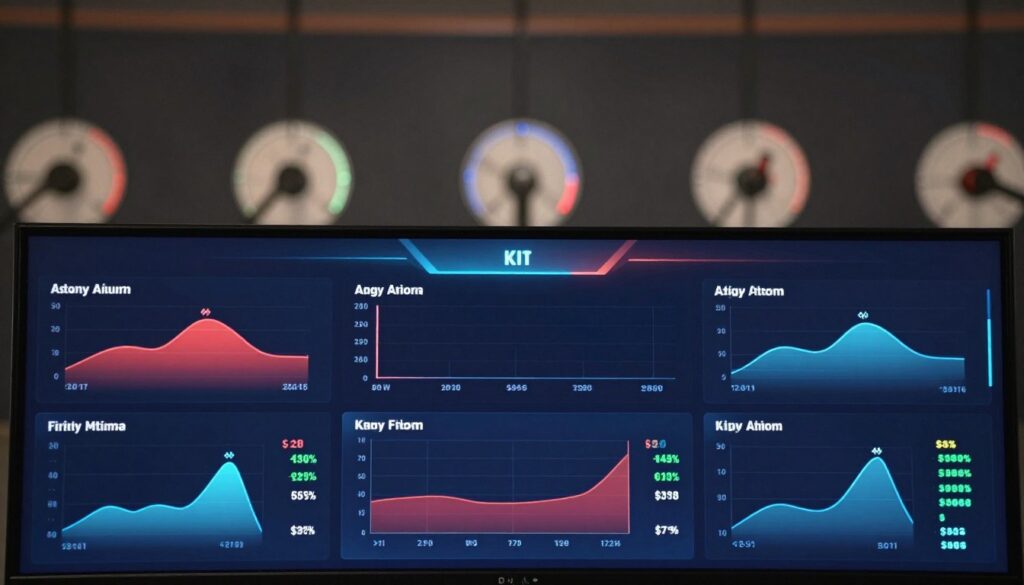
This shift from feeling to data is the core of modern aim training. Let’s break down the key performance indicators (KPIs) that separate the hopeful from the consistent. The following metrics are your new best friends—or your most brutal critics.
| Metric | What It Measures | Why It Matters |
|---|---|---|
| Reaction Time (RT) | The time, in milliseconds, it takes for you to begin moving your crosshair after a target appears. | Your raw, baseline speed. A low RT is critical for winning duels. A good aim trainer will show if you’re slower on one side of the screen, indicating a visual or motor-skew. |
| Flick-to-Target Precision | The accuracy of your initial, fast “flick” movement toward a new target. | This isn’t just speed; it’s about first-shot accuracy. A high flick-to-target score means you’re not just fast, you’re precise from the start. |
| Target Switching Accuracy | Your accuracy when moving between multiple, non-linear targets. | This is your in-game team-fight stat. It measures how well you can re-acquire and eliminate threats in a chaotic, multi-target scenario. |
| Smoothness & Tracking Precision | How steadily you can keep your crosshair glued to a moving target. | Critical for tracking heroes, tracking strafing enemies, or leading shots on a moving target. This is where “smoothness” in your mouse movement is key. |
| Accuracy Under Pressure | Your hit percentage when targets appear in rapid succession or with time pressure. | Simulates in-game pressure. Can you maintain precision when the heat is on? This metric separates the range heroes from the match-winners. |
This data-driven approach is what separates a good player from a great one. For instance, your aim trainer data might reveal your reaction time spikes from 200ms to 350ms when targets appear in your upper-left visual field. That’s not a “bad day”—it’s a specific, correctable weakness. This is the analytical edge: moving from “my aim feels off today” to “my left-side flicks are 20% slower, so I’ll drill that quadrant for 10 minutes.”
Modern aim analysis, as discussed in research on sensorimotor learning and performance, shows that deliberate, data-informed practice leads to superior neural adaptation. This means your brain and muscles learn the correct, efficient movements faster. The aim trainer isn’t just a game; it’s a biofeedback device for your hand-eye coordination.
Ultimately, the goal is to make your aim less of a mystery and more of a science. By tracking these metrics, you stop guessing and start improving with the precision of a, well, laser beam.
Comparison of top aim trainers
In the world of aim trainers, it’s easy to get lost. You’ll find everything from simple apps to complex tools. But for serious FPS aim practice, it’s not just about the tool. It’s about the coach, the data, and the science.
Features, Data, and the AI Coach in the Room
Aim trainers are like basic treadmills. They let you run but don’t check your form. Aimlabs, on the other hand, is like a personal trainer. It films your sprint, analyzes your gait, and corrects your form.
The difference is in the data. Aimlabs breaks down your score. It’s not just about hitting the target; it’s about how you hit it. The AI Coach is dynamic, built on cognitive and sensory assessments.
The science of FPS aim practice gets fascinating here. The AI analyzes your misses, not just sees them. It looks at cognitive load, reaction pathways, and micro-movements.
Other trainers might say you’re slow. Aimlabs’ AI might say your visual processing is 20ms behind your physical reaction. That’s the difference between practicing scales and having a conductor for your symphony of clicks.
Aimlabs vs. The Rest: A Data-Driven Rundown
Let’s dive into the details. A simple features checklist isn’t enough. We need to look at the philosophy. A bare-bones trainer gives you a static course and a score.
Aimlabs, as shown in our aim trainers comparison, offers a dynamic ecosystem. The Sensitivity Matcher is a precision tool that translates your muscle memory perfectly from game to game. The Valorant Training Center is a 1:1 replica for tactical practice.
Here’s a cold, hard look at how the leaders stack up on the features that transform FPS aim practice from a grind into a science.
| Feature | Aimlabs | Kovaak’s | 3D Aim Trainer |
|---|---|---|---|
| AI-Powered Analysis | ✅ Dynamic AI Coach with cognitive assessments | ❌ Limited analytics | ❌ No AI component |
| Game-Specific Scenarios | ✅ 1:1 Valorant, CS2 maps, Sensitivity Finder | ✅ User-created, less structured | ✅ Generic scenarios |
| Data & Analytics | ✅ Granular, cognitive breakdown | ✅ Basic performance stats | ❌ Minimal |
| Primary Focus | Cognitive & Scientific Training | Pure Mechanical Repetition | Casual Skill Building |
The table doesn’t lie. While others offer a target range, Aimlabs offers a full diagnostics lab. The “Sensitivity Matcher” and “Valorant Training Center” aren’t just features; they’re force multipliers.
They translate your FPS aim practice directly into in-game performance. They’re built on the real maps and mechanics you’ll face. Other trainers might warm up your fingers, but they won’t tell you why your flicks are drifting left under pressure.
Aimlabs’ AI Coach will. It’s the difference between a stopwatch and a coach with a stopwatch, a notepad, and a degree in kinesiology.
In the end, the choice is between a tool and a system. One helps you practice; the other teaches you how to practice. For the serious player, Aimlabs offers a curriculum. It’s the difference between doing push-ups in your room and having a Navy SEAL as your personal drill instructor.
The results, as they say in the data, speak for themselves.
Daily training routines
Getting better at a game isn’t just about wanting to. It takes a daily training routine that’s strict. You wouldn’t start a race without warming up. And you shouldn’t play a game without getting ready first.
The difference between a pro and a regular player is just 20 minutes a day. But those minutes must be used wisely, not wasted on random actions.
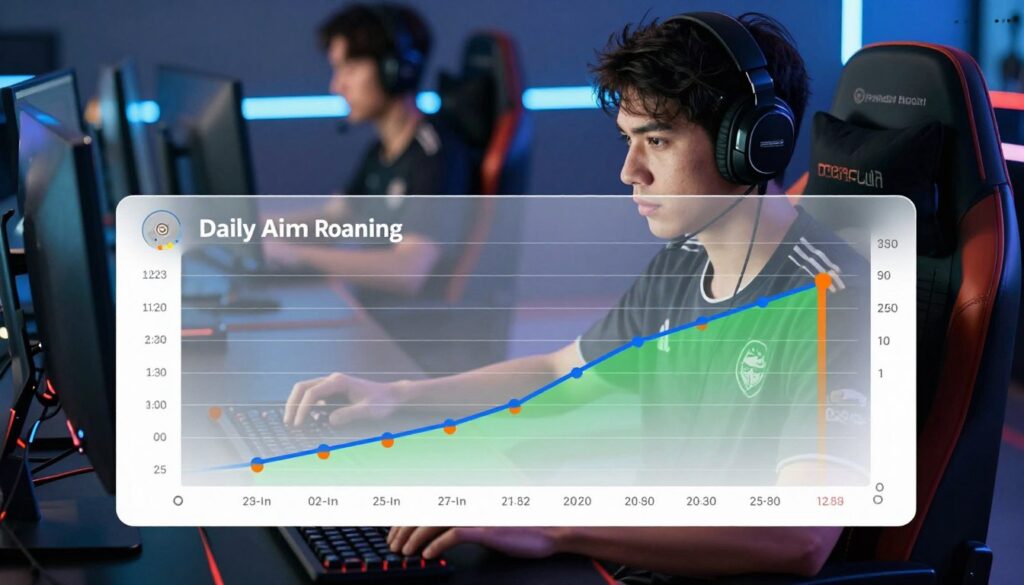
Playing until your wrist hurts won’t help you get better. It’s not about how long you play. It’s about how well you play each minute. The goal is to move from random playing to deliberate practice.
This means focusing on your aim, not just playing for fun. It’s like the difference between doodling and learning to draw. One is just for fun, the other has a purpose.
Building a Routine That Sticks
Being consistent is more important than being intense. You don’t need to train for hours every week. Just a little bit every day can make a big difference.
A good daily training routine helps you improve slowly but surely. It’s like a warm-up for your skills. It turns playing into a discipline.
The 20-Minute Prodigy
If you’re short on time, try the 20-Minute Prodigy routine. It’s quick, intense, and gets you ready to play fast. It’s not about how long you play, but how well.
- Minutes 0-5: Flick Start (High-Intensity): Start with a fast task like Gridshot. This wakes up your muscles and gets you ready to react fast.
- Minutes 5-15: Precision Tracking: Then, do a smooth task like Sphere Track. This is about keeping your aim steady. It helps you track moving targets better.
- Minutes 15-20: Cool-Down & Switch: End with a task that mixes things up, like Sixshot. This cools you down while keeping your aim sharp.
The Deep Practice Session
For 45-60 minutes, this is your plan for deep practice. It’s not just a warm-up; it’s a real workout.
- Dynamic Warm-Up (10 mins): Start with a light task to get your blood flowing. Then, do a task that needs big flicks. This gets you ready without hurting your score.
- Targeted Weakness Annihilation (20 mins): Use your Aim Lab or Kovaak’s stats to find your weak spot. Spend 20 minutes improving that one thing. Pick the right task based on your past results.
- Playlist of the Day (20 mins): Use the AI coach to pick a playlist that fits your role. If you’re a fast player, choose tasks that need quick flicks. If you’re a sniper, focus on long-range shots.
- Free Play (10 mins): Finish with free play. This is where you relax and make sure you’ve learned what you practiced.
Your past results show you what to do next. AimLab’s data helps you choose the right tasks. It’s not about playing for hours. It’s about playing with purpose.
Common mistakes in aim practice
The path to becoming a Grandmaster Guardian is filled with good but wrong intentions. Many aim trainers make three big mistakes. These mistakes come from an overconfident ego.
Overtraining and the Ego Challenge
You dream of being like s1mple, but hitting a stationary target is hard. Your ego pushes you to practice 360 no-scopes. But, your aim trainer shows your tracking is shaky.
This is the ego challenge. It’s skipping the basics to look cool. An Aim Lab user said the platform helped them “not suck at Valorant.” But, this requires practicing what you’re bad at, not just what looks good.
The Sensitivity Siren Song
The Sensitivity Siren Song is very tempting. After a bad game, you might blame your sensitivity. This leads you to try random sensitivity settings instead of practicing.
Tools like Aim Lab’s Sensitivity Finder 2.0 can help. It claims to improve your aim by 49%. Find a good setting and stick to it for a month. Consistency is key, and it starts with a solid foundation.
This includes your mouse settings and hardware configuration as the base of consistent aim.
The Mindless Grind
This mistake is running the same six-shot scenario for hours without thinking. It’s not real practice; it’s just your hands moving on autopilot. Aim training is like building a pyramid.
A wide base of smooth mouse control is essential. Ignoring shaky tracking to practice flicks is like trying to play a symphony without mastering the basics. The data shows that this approach doesn’t work.