

Cloud gaming costs have moved from a side issue to a practical question for many players who are weighing whether a new console, a PC upgrade, or a subscription fits their budget. The shift is not only about enthusiasm for streaming games. It is also about hardware prices, memory costs, and the growing sense that local gaming devices are becoming harder to refresh on a normal household schedule.
Why Cloud Gaming Costs Now Matter To Players
The pressure on gaming hardware is no longer limited to premium graphics cards. Research notes point to higher prices across memory, storage, and console components. TrendForce expected RAM and DRAM modules to represent 21% to 23% of total console hardware costs in 2026, while Omdia reported that mainstream PC DRAM retail prices nearly doubled in 2025 and that SSD and NAND storage prices rose by about 40%. Those figures do not mean every player faces the same upgrade bill, but they help explain why more people are reconsidering the timing of a new build or console purchase.
Hardware Inflation Hits The Upgrade Cycle
For PC players, the upgrade cycle has always depended on tolerance: how long a user can accept lower settings, older storage, or a GPU that no longer matches newer game requirements. A May 2026 Tom’s Hardware survey reported that 60% of PC gamers had no plans to build a new PC in the next two years, with high GPU, memory, and SSD prices cited as the main reasons. Survey data should not be treated as a full market census, but it does reflect a community mood that is visible in many upgrade discussions: delay has become a rational response, not only a lack of interest.
Console players are facing their own version of the same question. A Washington Post article published on June 6, 2026, noted that Nintendo’s Switch 2 launched at US$500, above its predecessor’s launch price, in the context of higher component and memory costs according to The Washington Post. That does not prove one-to-one causation for every console price change, but it does show why hardware pricing has become more visible to players who once treated console buying as the simpler path.
Cloud Gaming Costs And The Subscription Trade
Cloud gaming offers a different cost structure. Instead of paying most of the cost up front for a console or PC, players pay through subscriptions, bundles, or platform access. That can reduce the immediate barrier for someone who already owns a screen and a compatible controller, but it does not make gaming free. The key issue is whether recurring payments, catalog limits, streaming quality, and possible playtime caps feel fair compared with ownership of local hardware.
For that reason, cloud gaming costs should be judged across months and years, not only at sign-up. If a service is used heavily, the subscription can feel reasonable. If a player only wants a few releases, owns a large existing library elsewhere, or has poor network conditions, the value can weaken. Players are also watching policy changes closely; for example, GameCloudNetwork has covered how Xbox cloud gaming hour caps could change the value calculation for some subscribers.
What The Spending Data Says
The available spending data suggests that gaming demand has not collapsed under higher prices. Instead, the mix of spending is changing. The Entertainment Software Association reported that U.S. video game consumer spending reached US$60.7 billion in 2025, up 1.4% year over year, with hardware accounting for US$5.4 billion and subscription services rising about 20% the ESA reported. Those figures support a cautious reading: players are still spending, but subscriptions are taking a larger role in the budget conversation.
Hardware Is Still A Major Spend Category
Hardware remains a meaningful part of the market, and many players still prefer local systems for control, image quality, library ownership, modding on PC, or simply because their favorite games and friends are already there. Rising prices do not automatically push every player into streaming. They can also lead to longer console cycles, used hardware purchases, fewer upgrades, or more selective game buying.
The community impact is uneven. A player with a high-end PC from 2023 may be able to wait longer before feeling pressure. A new player, a student, or a household buying for multiple family members may face the higher price immediately. In that second case, a subscription or streaming option can look less like a novelty and more like a way to avoid a large purchase.
Adoption Signals Are Positive But Uneven
Boston Consulting Group’s Video Gaming Report 2026, published in November 2025, found that 60% of surveyed gamers had tried cloud gaming and that around 80% of those users reported a positive experience. BCG also projected cloud gaming revenue rising from about US$1.4 billion in 2025 to around US$18.3 billion by 2030. S&P Global’s Kagan forecast estimated global cloud gaming revenue at US$12.49 billion by the end of 2026, or nearly 7% of the global gaming content market.
Those forecasts point to growth, but they should be read with care. Positive trial experience does not always equal long-term subscription retention. Revenue forecasts can change if prices rise, catalogs weaken, network performance disappoints, or publishers alter licensing terms. Cloud gaming costs may attract players priced out of immediate hardware purchases, but player trust depends on consistent access and clear terms.
Community Impact Beyond The Price Tag
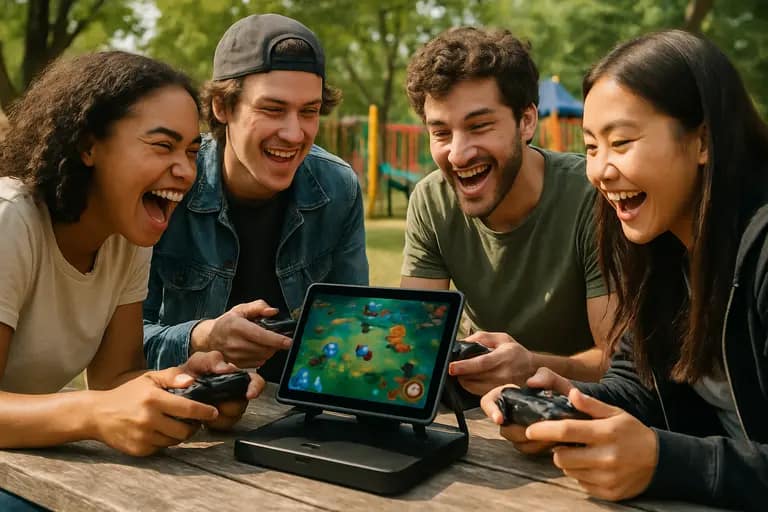
Player preference is shaped by more than the sticker price of a console or PC part. Communities form around platforms, friends lists, save files, digital libraries, content creation, mods, and shared expectations about performance. A cheaper way to access games can still feel like a poor trade if it breaks those habits.
Latency, Ownership, And Library Fit
Cloud services ask players to accept a different relationship with their games. The machine running the game is remote, the catalog can change, and the quality of the session depends on service conditions as well as the player’s connection. That can be acceptable for many genres and households, but it is not the same as owning a local device that runs the game directly.
This is where community sentiment can split. Some players value convenience and access across devices. Others see streaming as a useful supplement, not a replacement. For competitive players, speed-sensitive genres, or people with data limits, the trade can be harder to justify. For players who mostly want to sample games without buying new hardware, it may be more appealing.
Smaller Budgets And Shared Devices
Rising hardware costs can also change who gets to participate. A household may delay buying a second console. A PC player may skip a new build. A younger player may depend on shared screens rather than a dedicated machine. In those cases, cloud gaming can reduce the need for a high-cost device, but it may also create dependence on monthly payments controlled by a parent, guardian, or household budget.
For readers interested in exploring a diverse range of games, MostPlays serves as a related site within the same network, offering a platform for broader play options and community-driven game discovery. The wider issue is not whether one model replaces another. It is whether players can choose between local hardware, subscriptions, and streaming without being pushed into a poorer experience by rising entry costs.
Cloud Gaming Costs And Player Choice In 2026
As of September 10, 2026, the clearest pattern is not a full move away from consoles or PCs. It is a more cautious buying process. Players are asking whether a US$500 console, a US$1,000 to US$1,500 PC setup, or a recurring streaming plan best matches their habits. Amazon Luna GM Jeff Gattis said in July 2026 that rising console and PC hardware costs were pushing some dedicated gamers to consider cloud streaming because they were being priced out of the market. That view fits the broader data, but it should not be treated as proof that all dedicated players are ready to switch.
The more likely near-term result is mixed behavior. Some players will delay upgrades and keep using older hardware. Some will combine local devices with cloud access. Some will subscribe for a limited period around specific games, then cancel. Others will stay with local systems because performance, ownership, or library continuity matters more than avoiding a large purchase.
Cloud gaming costs are becoming central to that decision because they reframe the question from “Can I buy the best hardware?” to “What level of access is enough for the way I play?” For players, that is a practical and sometimes uncomfortable calculation. For the market, it means cloud gaming growth will depend less on slogans and more on pricing clarity, catalog stability, and whether the service feels fair after the first month.