

Remember when gaming was all about soda-stained keyboards in your friend’s basement? Those days are over. What started as a hobby has grown into a $16.7 billion global industry by 2033.
I’ve seen this change up close. It’s growing faster than tech stocks in a bull market. With over 3 billion gamers worldwide, it’s become the new American pastime.
Want to become a pro gamer? It’s not just about quick reflexes. You need to understand team organizations, tournament structures, and sponsorship deals, just like in traditional sports.
This isn’t just for kids anymore. It’s where business skills meet gaming perfection. Welcome to the modern competition’s thunderdome.
Essential Skills & Dedication
Let’s debunk a myth: being the best in your friend group doesn’t mean much. You’re up against 600 million other young gamers. It’s like trying to win American Idol against Beyoncé and Freddie Mercury.
The pro esports path needs more than quick reflexes. It requires discipline like a Navy SEAL and analytical skills like a quantum physicist. Think of structured practice schedules that are tougher than corporate jobs.
True pros don’t just play games; they break them down. I’ve seen players analyze match footage like cardiologists reading EKGs. Every detail is critical when millions are at stake.
Building a strong foundation needs three key elements:
- Mechanical mastery – Know game mechanics so well you could teach a college course
- Strategic intelligence – Read opponents like Sherlock Holmes solving crimes
- Equipment investment – Use gear so responsive it feels like telepathy
The gap between good and great isn’t talent – it’s obsession. While casual players sleep, pros review gameplay stats like Wall Street analysts. They treat each match like forensic evidence, searching for patterns and weaknesses.
This journey distinguishes those who play games from those who master them. The pro esports path isn’t about beating friends. It’s about beating everyone, everywhere, at once. For those ready to commit, our guide on becoming a professional gamer outlines the exact steps.
Remember: natural talent might get you noticed, but dedication builds careers. The top earners aren’t gifted – they’re relentless. They’ve turned gaming into a science and their controllers into surgical tools.
Your pro esports path begins when you stop playing for fun and start training for victory. The question isn’t whether you’re good enough today – it’s whether you’re ready to get better tomorrow.
Picking Your Game & Platform
Choosing your esports game is a big deal. It can make you a pro player or just another gamer. Your game choice is like a promise to yourself for a competitive journey.
Some players pick games like they’re picking a movie. But, the right game can make all the difference. Here are some games that are known for their competitive play:
- League of Legends – For those who enjoy chess matches with more screaming
- Counter-Strike – Tactical shooting that rewards patience and precision
- Fortnite – Architecture degree not required but highly recommended
- Rocket League – Soccer meets rocket science meets controlled chaos
- Super Smash Bros – Nintendo’s family-friendly facade hiding brutal competition
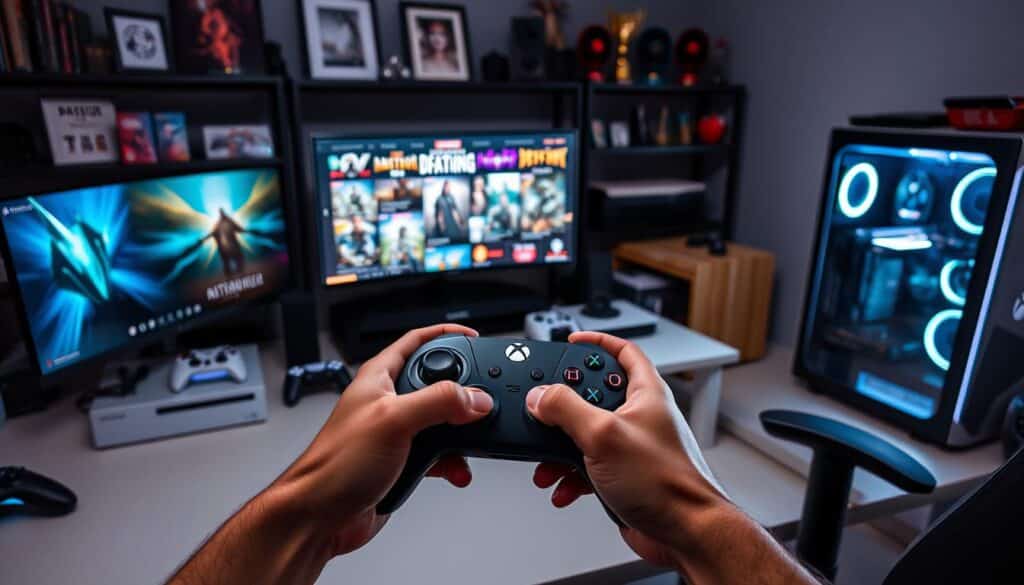
Choosing your platform is also important. PC games offer a pure competitive experience. But, consoles are more accessible, even if they’re less customizable.
Think about these points before you decide:
| Game | Skill Emphasis | Time Investment | Career Longevity |
|---|---|---|---|
| League of Legends | Team coordination | High | Established |
| Fortnite | Creative building | Extreme | Volatile |
| CS:GO | Precision aiming | Moderate | Stable |
| Rocket League | Physics prediction | High | Growing |
| Smash Bros | Matchup knowledge | Moderate | Niche but stable |
The best players find games that fit their brains. Some love League’s strategy, while others enjoy Fortnite’s creativity. Your game should feel like a hobby, not work.
Switching games can be tough. It’s like changing religions in the Spanish Inquisition. Choose carefully and good luck.
Joining Teams & Leagues
Finding your esports tribe is like digital dating, but with more energy drinks. You’ll look through many profiles, have awkward first matches, and learn that ghosting can happen after one bad game. The system has a tier system that’s even more strict than Hollywood’s.
Tier 1 teams are like A-listers, with sponsors, salaries, and their own gaming chairs. Tier 2 teams are like character actors – they’re good but might not always shine. Tier 3 teams are like indie movies – they might be the next big thing.
Finding the right team is more important than finding the best one. They’ll support you through late nights and tough games. Trust is key when you’re making decisions while tired.
You can find teams on Discord servers, Reddit, and game forums. Discord servers range from professional to chaotic. Reddit offers great advice and bad advice – learn to spot the difference. Game forums are where serious talent is found.
Conventions like PAX or E3 are great for networking. You might meet pros and make connections. I’ve seen careers start from hallway conversations at these events.
| Tier Level | Team Characteristics | Player Expectations | Success Rate |
|---|---|---|---|
| Tier 1 | Established orgs, salaries, sponsors | Full-time commitment, media training | Top 0.1% reach this level |
| Tier 2 | Semi-pro, tournament focused | 20+ hours weekly practice | 5% of competitive players |
| Tier 3 | Amateur, passion projects | Flexible but dedicated | Gateway to higher tiers |
Team drama is like reality TV, but more intense. Players leave for better offers, and conflicts happen over strategy. Choose teammates who won’t judge your late-night gaming habits.
To become a pro gamer, you need to find your digital family. They’ll support you through ups and downs. They’re waiting for you in a Discord server, hoping you’ll join.
Building Your Brand
In today’s esports world, it’s not just about playing games well. Being yourself is just as important. Your online identity can be more valuable than your gaming skills.
The pro esports path requires you to be both an athlete and an entertainer. Players with average skills can gain huge followings. They know that people watch personalities, not just games.
Streaming on Twitch and YouTube turns your gaming into money-making content. Ripraraa, for example, makes $10,000 a month from 250 hours of streaming. That’s more than many lawyers earn.

Your social media must be both professional and relatable. It should have the ambition of Elon Musk and the charm of Dwayne Johnson. This attracts sponsors and fans alike.
Sponsorship deals need impressive media kits. These should highlight your engagement, audience, and content reach. Brands are investing in your community, not just ads.
Keeping a good reputation means avoiding online fights. Every post or tweet adds to your brand story. Choose your words carefully.
Follow these essential tips for aspiring pro gamers to build your brand. You’re selling a lifestyle that viewers want to be a part of.
The best players know how to turn losses into funny content. This content can go viral, turning setbacks into engagement.
Your brand is your business card, your income, and your legacy. Mastering this makes the pro esports path more rewarding, financially and professionally.
Training Tips
Esports training is like a mix of chess and mixed martial arts. You need strategy and quick action. Starting an esports career means practicing hard, like a Navy SEAL.
Pro players study the game like it’s a book. Watching legends like Faker is like homework. They analyze every move, learning from the best.
Training modes are your testing ground. Here, you turn clumsy moves into smooth actions. Practice last-hitting, ability combos, and movement until it’s second nature.
Good players make smart moves, not just many. Focus on strategy, not just hitting shots. Learn about team play and game control.
Replays are your best tool. Use platforms like OP.GG to review your games. Track stats like gold and ability accuracy.
Local tournaments are your chance to shine. They’re like open mic nights before big shows. You’ll learn more here than in casual games.
Learning in a structured way helps fast. Many pros start with online courses before mastering advanced skills. It’s like learning scales before playing symphonies.
Here’s how top players train:
| Training Method | Time Investment | Primary Benefit | Pro Player Usage |
|---|---|---|---|
| VOD Review | 2-3 hours daily | Strategic understanding | 95% |
| Training Mode | 1-2 hours daily | Mechanical precision | 89% |
| Local Tournaments | Weekly | Pressure adaptation | 78% |
| Statistical Analysis | 30 min daily | Performance tracking | 92% |
Rest is as important as practice. Your brain works on patterns during rest. Pros take breaks like musicians, avoiding mental fatigue.
To start an esports career, balance is key. It’s not just playing games; it’s mastering a complex art. Learn both the art and science, and you’ll improve dramatically.
Common Pitfalls
The journey to become a pro gamer is full of challenges. It’s like navigating a maze with many traps. I’ve seen many careers crash and burn, often due to avoidable mistakes.
Money is a big issue. The cost of gear is like buying a used car. Tournament fees and travel expenses add up quickly. Many players spend all their money before winning anything.
Time commitment is huge. Forget about weekends, friends, and even taking care of yourself. The work is endless until you burn out.
Online harassment is a big problem. It’s worse than any Twitter argument. The pressure to perform can make you lose your hair early.
Smart players plan ahead. They learn many skills and know their careers won’t last forever. They prepare for the future, not just for gaming.
Key Pitfalls and Solutions
| Common Pitfall | Real Impact | Smart Solution |
|---|---|---|
| Financial Overextension | Debt before career launch | Budget for gear gradually |
| Time Mismanagement | Burnout and isolation | Schedule mandatory breaks |
| Toxic Environments | Mental health decline | Curate gaming circles |
| No Backup Plan | Career panic at 25 | Develop parallel skills |
The best players treat gaming like a real sport. They have coaches, mental health support, and financial advisors. They know to succeed, you must play the long game.
Every esports legend faced these challenges. The key to success is to be aware of these pitfalls.
Success Stories
We’re not talking about going from poor to rich anymore. Today, it’s about turning gamepads into gold in the esports world. Kids as young as eight are making it big, showing that in Fortnite, it’s all about your aim, not your age.
Tkay made $140,000 before many teens get their driver’s license. Sceptic turned tournament wins into a content empire, earning six figures without the burnout that many face. FaZeBizzle’s $200,000 win at PAX East could buy a house or a gaming rig that NASA would envy.
These aren’t just lucky winners. They’re smart entrepreneurs who know gaming is just the start. They build brands, secure sponsorships, and create content empires. As one young pro gamer shows, studying law while competing is key for a long-term career.
To succeed in esports, treat your talent like a business. When your prize money rivals a CEO’s bonus, you’ve become one.