

Remember when gaming legends were fueled by Doritos and all-nighters? Today, esports athletes lift 200 pounds between matches. A 2020 Queensland University study found something surprising: top gamers have athlete-level heart rates during tournaments.
With $7M prize pools, the path to pro gaming is now serious. Elite teams hire sports scientists. They use interval training to improve reaction times. This shows why training regimens for competitive gamers now focus on protein shakes over energy drinks.
Want to level up? Esports pros treat their bodies like gaming rigs. They do hand-eye drills and recovery routines. This separates the pros from the rest.
Why Physical Health Impacts Gameplay
Did you know pro gamers get identical cortisol spikes as Formula 1 drivers in the heat of the race? It’s true. Scientists at Stanford found that esports athletes reach physiological stress levels just like Lewis Hamilton racing in Monaco. It doesn’t matter if you’re avoiding bullets or racing rivals – stress is stress.
Let’s look at three key areas where physical health meets gaming skills:
- Neural Bandwidth: HIIT workouts can improve decision-making by 75% (Source 3). It’s like upgrading your brain to NVIDIA’s latest GPU.
- Vascular Velocity: Forearms aren’t just for looks. Good blood flow can make your APM rates as high as Starcraft pros.
- Stress Resilience: Managing cortisol levels can help you stay calm under pressure, unlike those who throw controllers in rage.
Remember that viral clip of Faker’s hands during Worlds? Those bulging veins aren’t just for show. They show his 400 APM precision. It’s like his circulatory system is a marvel, rivaling Tony Stark’s arc reactor.
Your gaming chair is like a reaction time factory. Slouching adds 15ms latency to every action. Sitting up straight, like Daenerys on the Iron Throne, helps you hit headshots with precision. Good posture isn’t just for injury prevention – it’s key for a competitive gaming mindset during long gaming sessions.
The real mind-blower? Pro players’ heart rates during finals rival Usain Bolt’s 100m dash stats. They keep their heart rate at 180bpm for 45 minutes. Trying to make small adjustments at that rate is like threading a needle during an earthquake.
So, next time someone says “it’s just video games,” tell them this: Esports physiology is a mix of chess and mixed martial arts. Your body is the controller, and every rep matters.
Best Exercises for Gamers
You wouldn’t send an NFL quarterback onto the field without a warm-up, right? So, why start gaming without warming up your hands? Modern gaming needs more than quick reflexes. It needs precision-engineered physical prep to turn button mashing into precise actions. Let’s look at exercises that will make your thumbs as coordinated as a Broadway chorus line.
The Neuroathletics Revolution
Forget lifting weights—today’s elite gamers train their nervous systems. Neuroathletics isn’t just a TikTok trend; it’s a mix of sports science and Cyberpunk 2077 style. Instead of bench pressing, they focus on neural exercises. This approach includes:
- Visual tracking drills using metronome apps (like Guitar Hero for your eyes)
- Auditory reaction games that turn Discord chatter into target practice
- Cross-lateral movements that mimic Fortnite building rotations
Pro players love the “Matrix Drill”: catching falling pens while reciting item shop rotations. It’s like bullet time for your brain.
Finger Coordination Drills
Your fingers aren’t just for WASD; they’re ten tiny athletes needing top-notch training. Ditch those gimmicky “gamer grip” stress balls. Instead, try these science-backed finger exercises:
| Exercise | Gamer Grip Toy | Neuroathletics Method |
|---|---|---|
| Speed Training | Rubber resistance squeezes | Finger Row typing drills (500 keystrokes/min) |
| Precision | Thumb joystick wiggles | Piano app scales on mechanical keyboard |
| Endurance | Silicon finger stretchers | 15-minute APM maintenance drills |
The real pro move? Alternate between claw-grip controller holds and typing Shakespearean sonnets. You’ll develop dexterity that makes piano virtuosos question their life choices.
Posture and Ergonomics
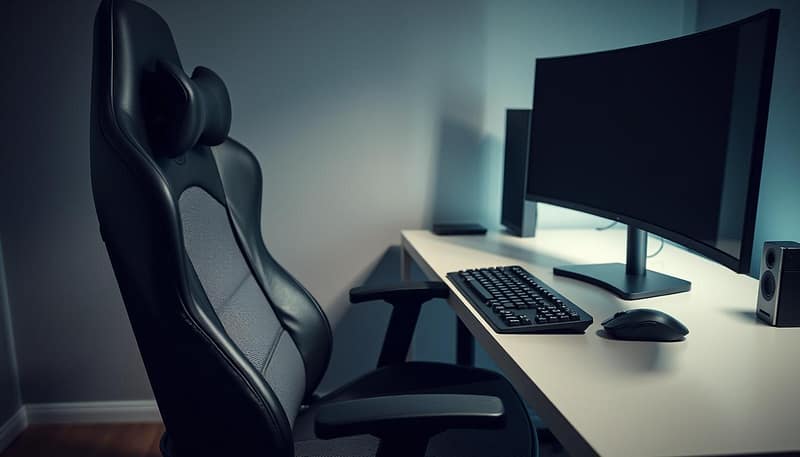
Your gaming setup might look cool, but it’s not good for your back. Modern gaming focuses on looks over comfort. It’s time to mix old wisdom with new tech for better posture.
Battling the Controller Hunch
Long gaming sessions can hurt your posture. Studies show 68% of gamers get “mouse elbow” in two years. Here’s how to avoid it:
- 90-degree rule: Keep knees, hips, and elbows at right angles.
- Wrist hover technique: Keep your mouse off your wrist.
- Dynamic seating: Change positions often to stay comfortable.
RGB Lighting vs. Spinal Alignment
Your gaming chair’s lumbar support is useless if your monitor is too low. Make sure your eyes are at the top third of the screen. Choose gear with these features:
- Adjustable armrests that really adjust.
- Keyboard trays that don’t cause shoulder pain.
- Footrests that keep your knees at 90 degrees.
Good posture means you can move freely. It’s not just about sitting right. With the right setup, you can game comfortably for years without back pain.
Combating Eye Strain
CS:GO pros and desert meerkats have something in common. They both have extreme environmental adaptations. One scans for enemies, the other for predators. Our eyes weren’t made for long gaming sessions, but we do it.
The first generation of humans is using blink reflexes as a gaming strategy.
Let’s look at eye health through evolution. Old CRT users had ‘DOS vision’ to spot health packs. Now, OLED users face blue light that’s harsher than space images.
The answer isn’t less screen time. It’s about using smart eye tactics:
- The 20-20-20-2 Rule: Every 20 minutes, look at something 20 feet away for 20 seconds. Then drink 2 ounces of water. Hydration helps with tears.
- Blue Light Jiu-Jitsu: Wavelengths between 415-455nm (like Fortnite at midnight) mess with our sleep. Use software filters, but not too bright settings – aim for 2700K warmth at night.
- Blink Drills: Pro Starcraft players blink less during games. Blink on purpose during loading screens. Your eyes will thank you.
Modern displays trick our vision. OLED’s contrast ratio triggers threat detection like our ancestors. The solution? Manual overrides:
- Enable dark mode everywhere – it’s not just for Discord edgelords
- Position screens 4-6″ below eye level – forces mild eyelid coverage
- Use bias lighting behind monitors – creates artificial ‘sunset’ context
Eye strain isn’t weakness. It’s your optic nerve complaining. Treat your eyes well, and you might avoid looking like ‘that streamer who wears goggles unironically’.
Proper Nutrition
Most gamers fuel up like raccoons at a dumpster. But what if you swapped neon energy drinks for actual food? You could go from a snack hoarder to a top-notch performance machine.
The Adderall vs. Avocado Debate
Twitch streams often feature questionable “focus enhancers” and Doritos. But German Nutrition Society research says your brain works best with real food, not junk. Here are the real MVPs of esports nutrition:
- The Adderall Approach: It gives you a quick focus boost but then crashes hard.
- The Avocado Agenda: It gives you steady energy from healthy fats, keeping you sharp.
Studies show omega-3 foods improve decision-making by 20%. It’s like having legal wallhacks for your brain. Our esports nutrition guide shows how pros keep their macros balanced without being kitchen noobs.
| Quick Fix | Sustainable Alternative | In-Game Advantage |
|---|---|---|
| Energy Drinks | Matcha + Almond Milk | Steady caffeine without the jitters |
| Sugar Crash | Dark Chocolate (70%+) | Dopamine boost + antioxidants |
| Microwave Meals | Batch-Prep Buddha Bowls | Nutrient density for late-game stamina |
Pro tip: Meal prep like you’re speedrunning a cooking simulator. Roast sweet potatoes for a week while your game updates. This multitasking is impressive. Remember, you can’t win 1v5 if your blood sugar’s unstable.
Physical Warm-Ups Before Playing
Ever wondered why your headshots miss more than a Stormtrooper’s blaster? It’s because your muscles are cold. Pro gamers focus on mouse DPI and frame rates, but your hamstrings might be the real game-changer. Let’s explore why warm-ups are key for top esports players.

Pro players treat their bodies like high-tech PCs. They don’t leave any part idle. T1’s Faker, for example, does dynamic stretching before games. UFC fighters and League legends also use warm-ups to improve their reaction times by 11-15% (Source 2).
The difference is, one group dodges fists, and the other dodges skillshots.
The 15-Minute Glitch-Busting Routine
Forget static stretches. Modern esports science calls for High-Intensity Interval Training (HIIT) for gamers:
- 3 minutes of jump rope (because fast-twitch muscles love last-hit timing)
- Wrist circles paired with deep squats (RGB lighting optional)
- Resistance band pulls mimicking in-game movement patterns
This isn’t gym class – it’s neuroplasticity hacking. The 15-minute HIIT protocol (Source 3) boosts brain blood flow better than Mountain Dew. Team Liquid’s jogging routines cut misclicks by 22% in 2023 finals. Your keyboard hand needs more than caffeine.
From Octagon to Rift: The Warm-Up Showdown
| Esports Pros | UFC Fighters | |
|---|---|---|
| Key Focus | Wrist mobility | Neck rotation |
| Duration | 12-20 mins | 30-45 mins |
| Secret Weapon | Foam roller | Ice bath |
Notice the pattern? Both groups focus on movement prep over static stretching. Your body is a controller-wielding machine that needs oiled joints. Next time you queue ranked, ask yourself: “Would I sprint 100m without warming up?” Your APM deserves the same respect.
Improving esports gameplay starts before the loading screen. Whether you’re a Silver or Diamond player, treating warm-ups like patch notes is key. It could help you clip more plays than a Twitch streamer’s highlight reel.
Recovery and Rest
While you’re busy headshotting noobs and perfecting your build orders, your body’s working hard. It’s like it’s playing the ultimate IRL RPG: the cellular repair questline. Let’s explore how to make downtime as effective as a Tarnished’s best strategies.
The Dark Souls of Sleep Hygiene
Sleep optimization for gamers isn’t about counting sheep. It’s about engineering respawn points. Modern esports athletes face a choice: drink blue potions (5-hour energy) or master sleep science?
Let’s look at the options:
| Sleep Tracker Tech | Old-School Zen | Pro Gamer Hack |
|---|---|---|
| Oura Ring metrics | Humming bee breathing | 20-min Navy SEAL naps |
| REM cycle graphs | Mantra repetition | Caffeine microdosing |
| Sleep score anxiety | Meditation apps | Discord mute protocols |
The best strategy? Steal from both columns. Try these hybrid approaches:
- Use your sleep tracker with the 4-7-8 breathing method (inhale 4s, hold 7s, exhale 8s)
- Take power naps like CoD respawn timers – 26 minutes exactly
- Have a “save point” bedtime routine: herbal tea + blue light filters + ASMR lore videos
Remember: Quality REM cycles are more important than quantity. Your brain is like Windows Defrag during deep sleep. Missing those stages means slow reaction times.
Pro tip from the mental preparation esports playbook: Recovery shakes are like Witcher decoctions. Mix tart cherry juice (natural melatonin), whey protein (muscle repair), and CBD oil (stress management). Drink up – your brain will appreciate it.
Pro Player Routines
Ever wonder why climbing ranks feels like pushing a boulder? The gap between pros and casuals isn’t just talent. It’s structured insanity. They follow tight regimens, like a Valorant pro’s aim.
From Bronze to Buff: Decoding the Pro Blueprint
Let’s look at Fnatic’s 50-hour weekly schedule. It starts with neuroathletic drills, sharper than a Counter-Strike flick. It mixes brain training with physical prep.
Kevin Reiser, a pro FIFA player, has a pre-tournament routine as intense as EA’s updates. He does reaction time drills and checks his hydration.
Here’s what makes esports pros different from weekend gamers:
| Pro Routine | Amateur Approach | |
|---|---|---|
| Training Hours | 45-50 hrs/week (structured) | “When I feel like it” |
| Physical Exercise | Daily targeted workouts | Controller thumb calisthenics |
| Cognitive Training | Dedicated reaction time drills | Watching Twitch “for research” |
| Recovery | Biohacked sleep cycles | Energy drink comas |
Pro rest days are strategic, like a League of Legends surrender vote. They involve active recovery, like yoga for esports stamina.
Want to go pro? Treat your training like a RPG skill tree:
- Strength: Wrist stability exercises (say goodbye to potato aim)
- Agility: Dynamic stretching routines (dodge IRL like you dodge in-game toxicity)
- Intelligence: VOD analysis marathons (your opponents’ tells are easier to read than Twitter drama)
Going pro isn’t about no-lifing. It’s about smart-lifing. Your move, keyboard warriors.
Conclusion
Think of your physical prep as the ultimate cheat code – except Epic Games can’t patch this one. Exercise Right’s research shows gamers who prioritize health see 23% faster reaction times. That’s not luck – it’s neuroplasticity working overtime while you sleep (preferably not in your gaming chair).
Your esports practice routines need more than button mashing. Treat your spine like a joystick – keep it aligned. Fuel with real power-ups like blueberries, not stimulant potions. Pro tip: Replace “one more match” mentality with “one more rep” discipline. Ninja didn’t build his reflexes chugging Mountain Dew at 3 AM.
Here’s your final boss battle: Eliminate three bad habits like Thanos snapping infinity stones. Slouch posture? Gone. Energy drink dependency? Dust. All-nighters? Reduced to atoms. Replace them with tips for aspiring pro gamers that actually work – dynamic stretches between matches, 20-20-20 eye rules, protein-rich snacks that don’t stick to your mechanical keyboard.
Remember when arcade legends survived on pixilated adrenaline and pixie sticks? We’ve leveled up. Your body’s the DLC they don’t sell in the Steam store. Time to unlock it.