
“Perfectly balanced, as all strategies should be.” Thanos might say this if he coached esports. But today’s games need more than quick decisions. The real battle is in the strategic thinking, not just the flashy moments.
League of Legends, for example, is a game of strategy and mind games. When T1 updated their team in 2023, they changed the game in South Korea. But most fans focus on the action, not the strategy.
So, what makes a pro gamer different? It’s not just about being fast. Coaches teach three key things: understanding the big picture, working together as a team, and being able to change plans quickly. To get better, focus on the strategy, not just the actions.
This isn’t just about gaming. It’s about understanding how top teams succeed. Are you ready to see beyond the surface? Let’s explore the real strategies, without any cheats.
Introduction: The Importance of Strategy in Esports
If CS:GO’s Nuke map were a physics experiment, it’d be Schrödinger’s cat—every possible strategy exists in superposition until the round starts. That’s the dirty little secret of pro play: competitive analysis isn’t just about predicting moves, but navigating infinite what-ifs. And in 2023’s $1.9B esports colosseum, where orgs now hire data scientists like they’re drafting star players, strategy has become the ultimate currency.
Take Evil Geniuses’ VALORANT Champions 2023 miracle run. Down 0-2 in the grand finals, they didn’t “git gud”—they meta-gamed the meta. By abandoning default plays and weaponizing opponent predictability (hello, Source 3’s vision concepts), they turned a mechanical mismatch into a cerebral checkmate. It was like watching Kasparov beat Deep Blue by unplugging it.
The numbers don’t lie:
- 73% of pro teams now employ dedicated strategy coaches (up from 41% in 2020)
- Matches decided by late-game adaptations increased 22% year-over-year
- Average pre-match prep time now exceeds 15 hours/week
This isn’t just gaming—it’s applied quantum mechanics. Source 2’s AI behavior models reveal how top squads treat each round like a probability cloud, collapsing possibilities through calculated aggression. Why peek mid when you can force rotations through timed utility? Why commit to Site B when feinting there creates 3 viable options elsewhere?
The takeaway? Raw skill gets you to the lobby. Strategy gets you the trophy. And as we dissect game-specific metas later, remember: whether you’re baiting smokes in CS:GO or tracking jungle timers in LoL, every pixel on-screen is part of a larger, sweatier chessboard.
Game-Specific Meta Breakdown
Competitive gaming is like chess, but with more explosions. Each game has its own game meta – a guide written in action and strategy. Let’s look at three games where strategy is key.

League of Legends: Macro and Micro Strategies
DRX’s 2022 Worlds play was a masterpiece. It was like Odysseus tricking Troy with a wooden pony, but in League of Legends. They controlled the game like the NSA watches TikTok.
They dodged skill shots with incredible precision. This shows the difference between pros and casual players.
Key elements that set pros apart include:
- Wave management tighter than Elon’s Twitter algorithms
- Objective trades calculated like Wall Street short sells
- Champion synergies that make Avengers teams look disorganized
CS:GO: Execution, Coordination, Utility Usage
FaZe Clan’s Vertigo smokes are art. They use grenades like a painter uses colors. Their 2023 Paris Major plays were perfectly timed and managed.
What makes their tactics effective:
- Flashbangs deployed with NASA launch precision
- Rotations faster than Twitter fact-checkers during Elon’s tweets
- Trade fragging that would make Walmart supply chains jealous
VALORANT: Role Play and Adaptation
Sentinels set up defenses like Fort Knox. Paper Rex plays like jazz musicians on Red Bull. They adapt quickly, like ChatGPT changes responses.
Here’s how they differ:
| Tactic | Sentinels | Paper Rex |
|---|---|---|
| Site Hits | SWAT team precision | Mosh pit energy |
| Economy | Spreadsheet-approved buys | “YOLO” with extra steps |
| Adaptation Speed | 3-round adjustment cycles | Real-time insanity |
Whether you’re studying these strategy guide blueprints or creating your own, remember: the best in-game decision-making comes from preparation and quick thinking. Now go make Sun Tzu proud – or at least stop whiffing those mollies.
Team Communication and Coordination
Ever tried herding cats while defusing a bomb? That’s what esports teamwork feels like without good communication. The key to success is a leader who can be heard over the game’s noise. Also, a tight practice schedule is essential.
Shotcalling: Where Chess Masters Meet Drill Sergeants
G2 Esports’ HooXi is a top IGL who turns talent into strategy. He balances the wild play of young stars like m0NESY with smart decisions. It’s like leading an orchestra with high-energy musicians.
Good leadership in esports means having a clear voice. It’s about making decisions that predict the enemy’s moves. And, having the emotional smarts to handle overtime.
Practice Regimens: From Sweatshops to Smart Work
Cloud9’s 14-hour practice sessions might seem extreme, but TSM’s “deliberate rest” shows the value of balance. Here’s how top teams prepare:
| Team | Daily Hours | Key Focus | Synergy Metric |
|---|---|---|---|
| Cloud9 | 14 | Muscle Memory | 87% Round Win Rate |
| TSM | 8 | Strategic Analysis | 92% Adaptability Score |
| G2 Esports | 10 | Role Fluidity | 95% Comms Efficiency |
The real magic is when team tactics go beyond repetition. It’s like the Avengers working together. You need strength and precision, all while someone’s shouting “Hulk smash!” in the background.
Analyzing the Opposition
In esports, knowing your enemy is more than just Sun Tzu wisdom. It’s essential homework. Top teams don’t just play opponents; they study them deeply. They use pre-game VOD autopsies and mid-match mental tricks to gain an edge.
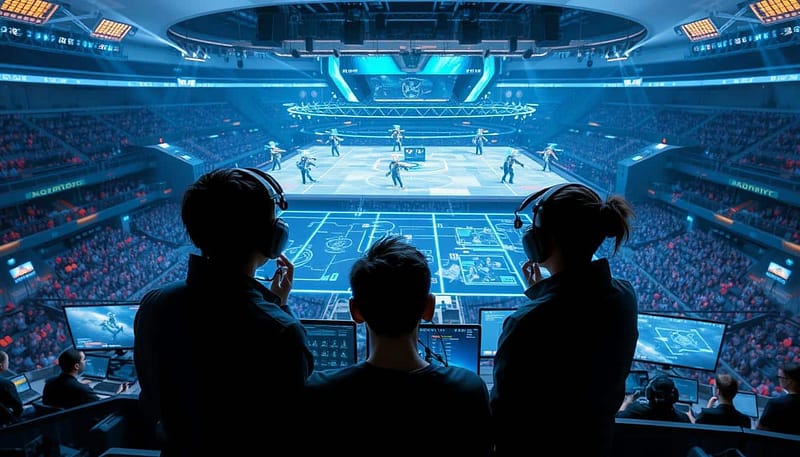
VOD Review: The Ultimate Homework Assignment
Remember when Fnatic used Harbor at Masters Tokyo? That wasn’t luck—it was counter-strategy theater. They analyzed opponents’ setups for weeks, finding gaps for their water-based controller.
Team Liquid tracked DRX’s Lotus plays like a CSI episode. They mapped spike plant zones and rotation patterns. This helped them predict pushes with alarming accuracy.
| Team | Analytical Tactic | Result |
|---|---|---|
| Fnatic | Meta-bending agent picks | 3-0 group stage sweep |
| Team Liquid | Heatmap prediction models | 78% post-plant success rate |
| MIBR | Post-nerf role redistribution | 37% win rate increase |
Mid-Game Mind Games
But what happens when the plan goes up in flames mid-match? That’s when mental tactics come into play. When MIBR changed their strategy after a nerf, they didn’t just switch agents. They rebuilt their economy strategy to force opponents into unfamiliar buy-round calculations.
Recent major adaptations include:
- The “Fake Default”: Mimicking setup patterns then hard-pivoting
- Emotional tempo control: Forcing rushed decisions through aggressive timing
- Resource denial: Starving opponents of ult points through calculated trades
It’s not just about having a backup plan. It’s about having a whole alphabet of plans. Knowing when to switch strategies is key. In today’s meta, being adaptable is the ultimate counter-strategy.
Real-World Examples: Strategic Triumphs and Fails
The esports world is not just about quick reflexes. It’s where smart strategies meet fast actions, leading to great wins or big losses. Let’s look at three esports tournament highlights that changed how teams compete in big games.
100 Thieves showed their skill in 2023’s VALORANT on Ascent. They used a smart defense strategy, winning 78% of their economic rounds. On the other hand, LOUD had five straight losses in the same tournament. Their poor use of special abilities left them struggling.
Strategic Impact of Roster Changes
Evil Geniuses made a bold move in 2023 by adding Demon1. Critics doubted the choice, but six months later, the young player shined at Champions with a 1.42 K/D. This shows that raw talent can beat experience if nurtured right.
| Team | Strategy | Outcome | Lesson |
|---|---|---|---|
| 100 Thieves (VALORANT) | Disciplined eco-round prioritization | Champions 2023 Semifinals | Resource management > hero plays |
| LOUD (VALORANT) | Over-aggressive overtime pushes | 5 consecutive OT losses | Adapt or implode |
| Evil Geniuses (CS:GO) | Controversial rookie signing | Unexpected Major qualification | Data beats conventional wisdom |
| T1 (League of Legends) | Faker-less adaptive playstyle | 2023 Worlds Finals run | Systems > superstars |
Faker’s injury in 2023’s Worlds was a turning point for T1. Without him, they found new ways to play, with Oner becoming a key player. This led to a surprising finals appearance, changing how analysts view esports tournament highlights.
This shows a hard truth: In esports today, it’s not just about your best player. It’s about how well your whole team adapts. The winners are not just playing the game; they’re gaming the system.
How to Apply Pro-Level Strategies to Your Own Play
Let’s cut through the noise: climbing from Gold to Radiant isn’t about “Rocky montages with more keyboards”. It’s about stealing strategies from pros without getting caught. Think of it as intellectual shoplifting where the security cameras are your Twitch stream.
Step one: Reverse-engineer greatness. Tools like Leetify turn VOD reviews into cheat codes, showing exactly where your crosshair placement looks more lost than Netflix’s algorithm. Compare your gameplay to top-tier players using their heatmap overlays – if your positioning resembles a toddler’s finger-painting, it’s time to adjust.
Skill Optimization Roadmap
| Rank Tier | Focus Area | Pro Resource |
|---|---|---|
| Gold-Platinum | Mechanical consistency | Aim Lab scenarios |
| Diamond-Ascendant | Rotational awareness | ProTracker.gg |
| Immortal-Radiant | Meta adaptation | Spike.gg trend reports |
Comms overhaul: Your Discord shouldn’t sound like Xbox Live’s 2007 squeaker convention. Try these upgrades:
- Designate an IGL (In-Game Leader) using “democracy hours” – rotate shotcallers until you find your Faker-meets-Gordon-Ramsay hybrid
- Implement code words that aren’t just food items (unless you’re playing Kitchen Simulator 2024)
- Record and analyze comms using Craig bot – if your callouts have more dead air than a canceled Netflix series, recalibrate
The real secret? Pro play isn’t about flashy 360 no-scopes. It’s about structured obsession. Schedule practice blocks like you’re training Olympic athletes:
- 20 minutes aim training (no TikTok breaks)
- 45 minutes VOD study (pretend you’re Scorsese editing film)
- 2 hours scrims with deliberate focus areas
Remember: every pro was once the kid getting tea-bagged in spawn. The difference? They turned salt into strategy. Now go out there and make your opponents question their life choices.
Conclusion: Evolving Your Game through Strategy
The esports world is changing fast. Victory now goes to those who adapt, not just follow trends. Teams like FaZe Clan lead by creating new strategies, not just following the crowd. It’s like a mix of cooking and quantum physics, where plans change in an instant.
Research shows that being able to change and adapt is key. Karrigan, a CS:GO leader, changed his game to stay ahead. He updated his strategies like a playlist, always looking for what works best. His secret was to keep trying new things until they worked.
AI tools like Mobalytics are changing how we play games. Imagine having a coach that can analyze your gameplay and suggest new strategies. But, too much reliance on AI can make your game feel stale.
The best strategy is to be like a TikTok dancer. Learn the basics, then add your own twist. When DRX changed their strategy in the 2023 LCQ, they didn’t break rules, they made new ones. This mix of preparation and creativity is key.
To stay ahead, always ask yourself if you’re solving problems or just repeating old solutions. The esports world rewards those who keep learning and trying new things. Stay curious and keep pushing the limits of what’s possible.