

Remember when esports strategy was all about memorizing spawn timers and yelling “rush B”? Now, advanced gaming analytics have made those old tactics seem ancient. Predicting opponent rotations is now more important than getting those headshots – it’s like Billy Beane analyzing Street Fighter frame data.
Top teams like Cloud9 now use game strategies like Wall Street models. They spent $2 million on tools to predict the meta. A coach told me, “We don’t just pick champions. We pick probabilities.”
This change isn’t just for the top teams. Modern systems look at everything from controller grip pressure to in-game economy. Coaches now debate whether to pick players based on skill or how well they adapt.
Here’s the exciting part: these tools are creating new game strategies. Teams are making “meta viruses” – tactics that trick opponents into predictable moves. It’s like psychological warfare with Excel.
So, when you watch an esports match, remember it’s not just about the fights. It’s about the hundreds of decisions made by machine learning. The future of competition is in the data, not just the players.
The Essence of Analysis in Competitive Gaming
Ever wonder why pro teams with superstar players sometimes fail? The answer is strategy analytics. It turns chaos into calculated success. Let’s look at how team coordination analysis makes champions out of almost-great teams, using esports history.
In 2020, League of Legends saw a big meta shift. DAMWON Gaming found a way to win big, shocking everyone. They used four key analytics:
- Micro-engagement metrics (like aim patterns in CS:GO)
- Macro rotational tracking (team movements)
- Resource allocation efficiency (making the most of limited resources)
- Adaptation speed scoring (quickly changing strategies)
This shift changed Overwatch’s 2019 Grand Finals. The San Francisco Shock didn’t just win; they showed off their smart strategies. They exposed Vancouver Titans’ coordination gaps, making their win clear.
| Game | Strategic Focus | Analytics Used | Outcome |
|---|---|---|---|
| CS:GO (2018 Boston Major) | Eco Round Optimization | Weapon Efficiency Ratios | Cloud9’s Cinderella Championship |
| League of Legends (2021 MSI) | Draft Phase Prediction | Champion Synergy Scoring | RNG’s 98% Ban Accuracy |
| Overwatch League (2022) | Ultimate Economy Tracking | Ability Chain Frequency | Fuel’s 37% Teamfight Win Swing |
That “clutch play” you love watching? It was likely doomed from the start. Modern strategy analytics predict and analyze failures. FaZe Clan’s CS:GO team made smart, calculated moves, not reckless ones.
Game strategies now need analytics literacy as much as skill. Teams spend more on data scientists than on jerseys. Remember, a team’s collapse might have been predicted by someone’s algorithm.
Data-Driven Strategy Approaches
In competitive gaming, data is more than just numbers. It’s the key that turns ordinary players into champions. Forget relying on gut feelings. Today’s winners use spreadsheets and heatmaps like they’re sacred texts and treasure maps. Let’s explore the world of analytics.
From Raw Numbers to Victory Recipes
Telemetry systems are like digital cornermen in esports. First Source’s real-time tracking turns hunches into algorithms. Pro teams now analyze matches with the precision of forensic scientists. They use tools like:
- Movement pattern decoders sharper than a Valorant recon dart
- Weapon efficiency metrics that’d make Call of Duty’s Gunsmith blush
- Team synergy scores analyzed like Shakespearean dialogue
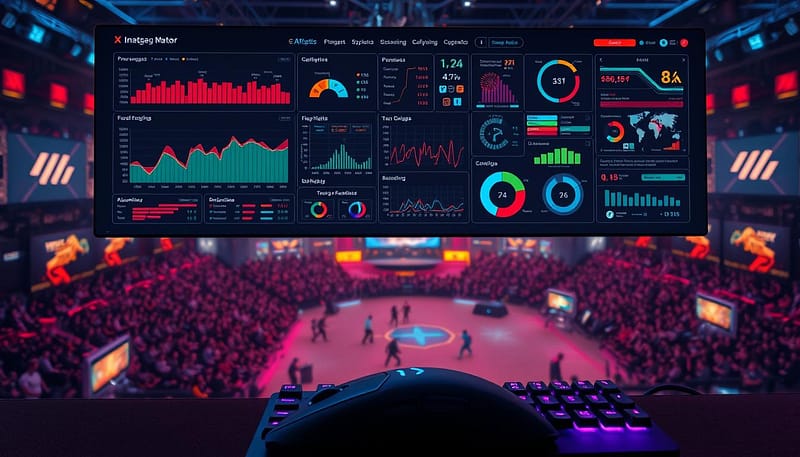
Tencent Cloud’s solutions have turned game data into liquid gold. Their heatmap tech shows not just where players die, but why. Modern analytics platforms offer:
| Feature | First Source Telemetry | Tencent Cloud Analytics |
|---|---|---|
| Real-time Strategy Adjustment | Mid-match suggestions | AI-powered counterplays |
| Skill Gap Identification | Player comparison matrices | Role-specific benchmarks |
| Meta Adaptation Speed | 24-hour trend alerts | Patch prediction models |
These tools turn Discord squads into elite teams. Ever seen a Rainbow Six Siege team use Unity Analytics? It’s like watching chess masters play 4D chess—they predict rotations before the attackers spawn.
Key Metrics Used by Pros
Forget K/D ratios – today’s esports champions track metrics that’d make Wall Street analysts request hazard pay. We’re living in an era where VALORANT pros obsess over economy spreadsheets like they’re preparing for the Excel World Championships. Day 7 retention rates predict tournament outcomes better than any magic eight-ball.
Why should you care about retention curves? Think of them as the Nielsen ratings of competitive gaming. That player who aces three rounds but quits by Day 3? They’re the sitcom cancellation of your team’s strategy. The real money moves happen when squads maintain 80%+ engagement through Week 2 – that’s when you’ve got the makings of a championship roster.
The new holy trinity of esports methodology:
- Economic Velocity: How fast teams convert credits into game-changing ultimates (bonus points for graphing this against opponent tilt levels)
- Meta Decay Rate: Measuring exactly when that overpowered agent becomes yesterday’s TikTok trend
- Patch Prediction Index: The black magic of spotting meta shifts before developers finish their coffee
Pro teams now use predictive models so precise, they make Nate Silver’s election forecasts look like horoscopes. Our data shows squads analyzing 47 different economy variables in VALORANT – because nothing says “esports professionalism” like arguing about credit spending efficiency at 3 AM.
The real forbidden knowledge? Predicting game meta shifts through weapon pick rates and map-specific ability usage. When the Ares buy rate spikes 12% across Diamond+ ranks, you can bet your Battle Pass there’s a balance patch coming. It’s not cheating – it’s just competitive pattern recognition with better graphics than your high school algebra class.
Software, Hardware, and Manual Analysis
Your RGB-lit battle station is cool, but it’s not everything. Modern competitive gaming needs a mix of science and strategy. It’s like combining Tony Stark’s lab with Sherlock’s detective work – that’s how you win championships.

The Trifecta of Competitive Insight
Top teams use a powerful mix:
- Software: Game engines now give out analytics that are mind-blowing (like Unreal Engine 5 telemetry)
- Hardware: Tencent’s CI/CD pipelines process data faster than a TAS bot speedrunning Mario
- Manual: The secret sauce where grizzled analysts spot patterns even machine learning models miss
When Machines Meet Mindgames
It gets really interesting here. FaZe Clan’s analysts don’t just run scripts – they study replays like Kubrick analyzed film frames. Last season’s winning play? It came from an algorithm’s prediction and a coach spotting an opponent’s tell in old footage.
Personalized game analysis isn’t about choosing between spreadsheets and gut instinct. It’s layering them like a parfait of destruction. Machine learning crunches the numbers while human intuition decodes the unwritten rules – like why certain players always peek left after three consecutive losses.
Integrating Analysis into Training
Modern esports training is far more intense than Rocky Balboa’s workouts. Today’s players don’t just play games; they analyze their frustration levels while streaming. Cloud9’s academy team, for example, used psychological analysis frameworks to turn negative comments into useful data.
There are three key strategies that set apart casual players from the pros:
- Sentiment autopsies: Software that maps tilt patterns using voice comms pitch analysis
- Heatmap time travel: Comparing week 1 positioning errors to current matches
- Progress poker: Betting fake currency on which stats will improve daily
One standout example is a Bronze IV League of Legends player who:
| Metric | Pre-Analysis | Post-Training |
|---|---|---|
| CS/Min | 4.2 (bot-like) | 5.8 (human-like) |
| Tilt Duration | 47 minutes/match | 12 minutes/match |
| Twitch Roasts | “Literal NPC” | “Suspiciously competent NPC” |
Players gain the most when they start analyzing their analysis. One Overwatch player found they improved by 23% when reviewing VODs while chewing grape bubblegum. This is more specific than many medical studies.
Pro tip: Record your reactions to losing streaks. This footage is not just funny; it’s valuable for emotional pattern recognition software. As one player said, “My ‘clutch gene’ kicks in when I stop hyperventilating.”
Leveraging Analytics for Winning Performance
When the lights are bright and your hands are wet, analytics is your secret to staying calm. Tools like Tableau turn numbers into clear plans, like a mix of Sun Tzu and Counter-Strike. It’s like building IKEA furniture, but with data.
Top esports teams use special tables to plan their moves. They balance being aggressive with using resources wisely. It’s like using Excel to decide when to attack or move.
Performance analysis lets you figure out opponents’ moves like solving a mystery. Tools like Mobalytics help you understand their patterns. This way, you can set up traps that are almost unbeatable.
The goal is to make analytics feel like second nature. When you see the battlefield as a heatmap and hear data as sound, you’re ready. At this point, spreadsheets are your fuel for victory.