

Luna Remote Play changes how Amazon’s cloud gaming service handles local multiplayer by letting a paying host invite remote participants into shared sessions. For players and communities, the accessibility question is not whether the feature is useful in theory. It is whether its design reduces real barriers for people who cannot easily share a couch, own dedicated hardware, or travel to a friend’s home.
Luna Remote Play And The Access Shift
Amazon introduced the feature on September 10, 2026, allowing one host with Amazon Prime or Luna Premium to invite up to seven other people into a multiplayer session remotely, according to GeekWire’s report. That structure matters because many local multiplayer games have long assumed that players are physically together. For households and friend groups split by distance, illness, work schedules, transport limits, or mobility constraints, that assumption can quietly exclude people.
By moving some couch co-op sessions into the cloud, Amazon is addressing a familiar community problem: local play is socially valuable, but the practical setup can be narrow. A person may own a phone or tablet but not a console. A player may want to join a family session without being in the same room. A disabled player may have the time and interest to participate but face fatigue, travel friction, or the need to use a familiar assistive setup at home.
The change also sits within a broader cloud gaming debate. Services such as Luna do not remove every barrier; they move several of them. The cost of a console may be less central for guests, while internet quality, device compatibility, account setup, controller access, and supported-game lists become more central. For related context on how this feature fits Amazon’s cloud strategy, GameCloudNetwork has assessed how shared cloud play changes Luna.
Why Luna Remote Play Matters For Shared Sessions
Luna Remote Play is most meaningful for games that were built around players sharing one screen or one room. The social value of those games often comes from quick communication, low-pressure participation, and group play that includes less frequent gamers. Remote access can preserve some of that social format without requiring everyone to own the same hardware or subscribe to the same service.
The host-centered model may be especially relevant for families and friend groups with uneven spending power. If one person already pays for Prime or Luna Premium, guests can be brought into compatible sessions without each guest purchasing a separate subscription. That does not make the feature free in a strict sense, since the host still pays and all players need suitable devices and internet access. Still, it lowers the entry point for invited players compared with setups that require every participant to buy the same console, game, and online membership.
Subscription Design And Guest Access
Amazon’s own September content update says invited guests do not need Prime or Luna Premium, but they do need an Amazon account and a supported device; the host must have the eligible subscription, as described in Amazon’s Luna update. That distinction is central to the feature’s accessibility case. It expands access for guests while still keeping control of the session tied to a paying account.
From a consumer perspective, this is a mixed design. It can help a group include someone who would never justify a standalone subscription. It can also make the host the gatekeeper: if the host cancels, changes plans, or lacks access to a compatible title, the group’s shared play option disappears. For community organizers, families, and disability support groups that use games socially, that dependence may be manageable, but it should not be ignored.
Guest Access Without Extra Subscriptions
The strongest player-facing benefit is that guests are not asked to evaluate a new paid service before joining a session. That matters because subscription fatigue is real for many gaming households. Every extra account, payment, renewal date, and catalog restriction can turn a casual invite into a decision with financial consequences.
The Amazon account requirement is still a step. Some players may be comfortable with it; others may have privacy concerns or account-management difficulties. For younger players, families also need to handle supervision and payment settings carefully, especially in ecosystems that connect entertainment, retail accounts, and subscriptions. The feature reduces one access barrier, but it does not remove the need for informed account management.
Accessibility Benefits For Players With Limits
For players with disabilities, homebound players, or people in remote areas, the potential benefit is practical rather than symbolic. A player who cannot travel easily may still join a group. A player using a preferred display, input device, or assistive arrangement at home may avoid the friction of adapting to someone else’s living room setup. A person with limited hardware may be able to participate from a supported device rather than a dedicated gaming machine.
The feature may also support a wider idea of multiplayer inclusion. Many accessibility discussions focus on settings inside a game: subtitles, remapping, difficulty options, screen readers, contrast settings, or input flexibility. Those remain essential. Yet access also depends on where and how play happens. A game that is technically accessible can still exclude someone if the only realistic way to play with friends is to be physically present in a specific home.
Luna Remote Play cannot solve every design issue inside individual games. If a title lacks readable menus, flexible timing, or usable input options, remote access alone will not make it accessible. The feature is better understood as a distribution and session-access change: it widens the doorway to some multiplayer experiences, while the quality of the experience still depends on the game and the player’s setup.
- Potential access gain: guests can join without dedicated gaming hardware or their own Luna subscription.
- Persistent limit: only compatible games support shared sessions.
- Player concern: network instability can affect comfort, timing, and reliability.
- Community effect: friend groups can include players who are distant, homebound, or unable to travel.
For readers comparing cloud services and community play options, a related gaming site in the same network, Most Plays, covers broader player-facing game discovery and play culture.
Hardware Barriers Are Lower, Not Gone
A key accessibility strength is that guests do not need high-end local gaming hardware for supported sessions. That can matter in households where a console purchase is unrealistic or where a player’s main device is a tablet, phone, browser-equipped computer, or smart TV. The value is greatest when the player already owns a supported device and has a familiar way to control games comfortably.
Even so, “no console required” is not the same as “no equipment barrier.” Players may still need a compatible controller or a comfortable input method. Some players with motor impairments depend on specialized hardware. If that hardware does not work well with a specific device or cloud session, the nominally low hardware barrier may still feel high. Accessibility depends on the whole chain: device, browser or app, controller, network, game interface, and the host’s catalog access.
Network Quality And Compatibility Risks
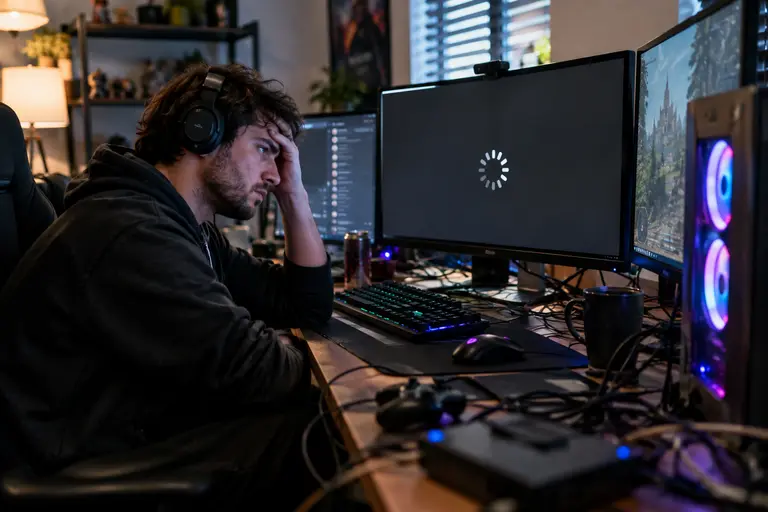
Cloud gaming places a heavy burden on connection stability because the game runs remotely and player inputs travel over the network. For some players, that is a fair trade for avoiding expensive hardware. For others, especially those who rely on precise timing or who are sensitive to delay, inconsistent performance can undermine the session.
This issue can affect disabled players in specific ways. A player with a motor impairment may already be working with adapted inputs, slower response windows, or fatigue. Added latency can make fast reactions harder. A player with cognitive processing challenges may find stutter, delay, or inconsistent feedback more tiring than a local session. These effects vary by person, game type, region, device, and home connection, so they should be discussed cautiously rather than treated as universal.
Compatibility is another constraint. The research notes indicate that Remote Play applies only to titles Luna marks as compatible, with more than 60 games supported at launch. That is a useful starting point, but the number alone does not reveal whether the supported catalog matches the games that a given family, friend group, or accessibility community wants to play. A small set of highly suitable co-op games may matter more than a larger list that does not fit a group’s needs.
Cloud Access Depends On Stable Conditions
Luna Remote Play should be judged less like a single feature toggle and more like a chain of conditions. The host needs the right subscription. Guests need Amazon accounts and supported devices. The game must be compatible. Every participant needs a connection that can handle streaming. The group also needs the game itself to be accessible enough for its players.
This chain explains why the feature can be valuable without being universally reliable. For a player in a rural area with limited broadband, the lack of console ownership may not be the main obstacle. For a player with strong internet but no gaming PC, the service may be far more practical. For a player using assistive technology, success may depend on whether the chosen device and game controls fit their existing setup.
What Luna Remote Play Means For Gaming Accessibility
The most defensible view is that Luna Remote Play expands access to some multiplayer experiences while leaving major accessibility questions in place. It can reduce the need for shared physical space, duplicate subscriptions, and expensive guest hardware. Those are real gains for communities that often organize play around unequal resources and different physical needs.
Its limits are just as relevant. A host-paid model can still create dependence. Compatible-game support narrows the feature’s reach. Cloud performance can vary. Account requirements may create friction for some users. None of those drawbacks cancel the access benefit, but they shape who benefits most.
For Amazon, the feature positions Luna less as a solo streaming catalog and more as a social access layer for multiplayer sessions. For players, the fair test will be practical: whether a friend who could not previously join can now play comfortably, affordably, and consistently. If that happens, the feature has value. If network conditions, catalog gaps, or input issues block participation, the accessibility promise remains partial.